South Asian Community · Palo Alto, CA · English · Hindi · Bengali · Marathi · Bay Area + California Telehealth
You have been holding
something that was never quite named.
You have been carrying it quietly through family dinners, performance reviews, and the particular exhaustion of being fluent in every room except the one inside yourself. There is a space here for what has not had words yet.
The language your nervous system learned first.
There are things that exist in Hindi that do not arrive intact when you reach for them in English. There are feelings that Bengali or Marathi holds that become approximate the moment you translate them. Not wrong but approximate. And approximate, in a therapy room, is a kind of silence.
Leela Mental Health offers sessions in English, Hindi, Marathi and Bengali, because emotional language is not interchangeable. Desi clients, South Asian clients, immigrant clients many find that the feeling they have been circling in English has a name in the language where it was first formed.
English
हिंदी
বাংলা
Bangla — sessions available
मराठी
Marathi— sessions available
The Team
The people you’d be working with.
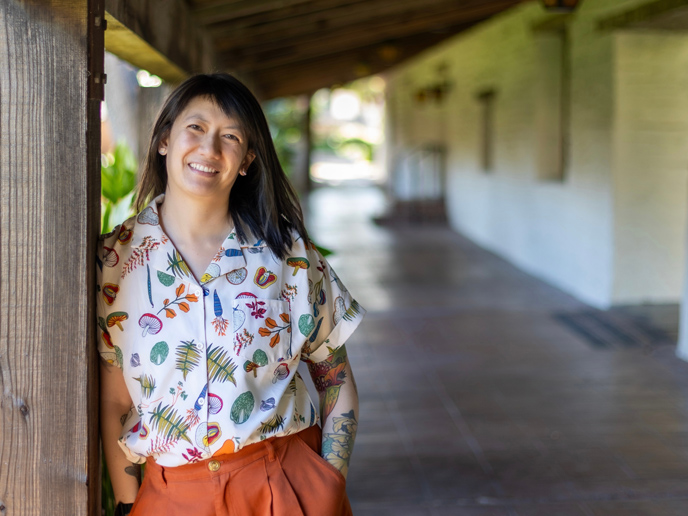
Shanise Mok
AMFT 164358 · SUPERVISED BY MOITREYEE CHOWDHURY, LMFT 121934
LGBTQIA+ · TEENS · ADULTS · COUPLES · TRAUMA
Queer-affirming therapy for teens, adults, older adults, couples, and people in all relationship structures. Works with gender and sexual identity, chronic health conditions, complex trauma, and BIPOC and immigrant experience.
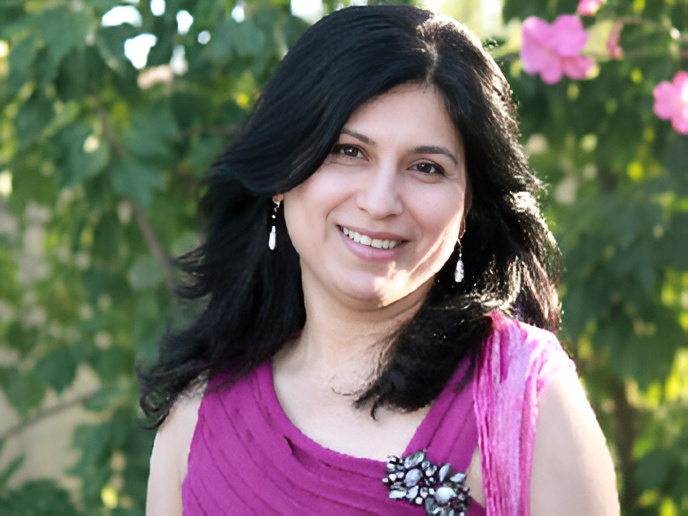
Neeraja Muthal
AMFT 144185 · SUPERVISED BY MOITREYEE CHOWDHURY, LMFT 121934
COUPLES · INDIVIDUAL · FAMILY
Works with adults on anxiety, depression, trauma, grief, work stress, and relationship conflict, drawing on CBT, psychodynamic, and solution-focused approaches. A South Asian immigrant herself, she works closely with clients navigating culture, family expectation, and identity.
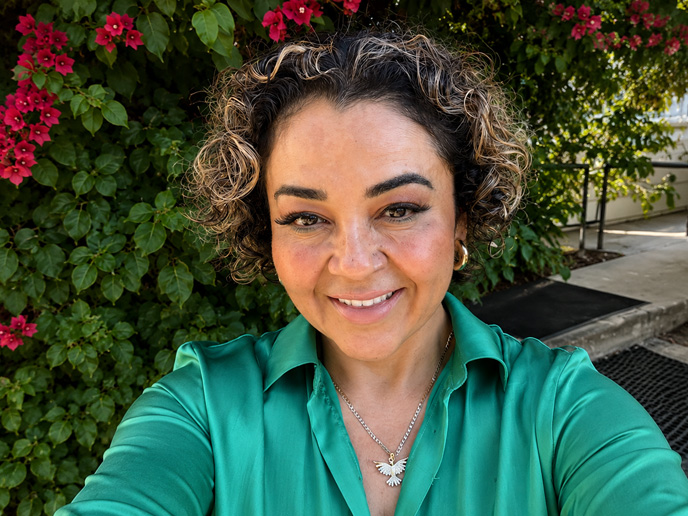
Teresa Gamez DePerez
LMFT 152063 · SPANISH
COUPLES · INDIVIDUAL · TRAUMA · GRIEF
Trauma-informed therapy for adults and couples working through anxiety, depression, infidelity, loss, and generational family patterns. A Latina therapist offering sessions in English and Spanish.
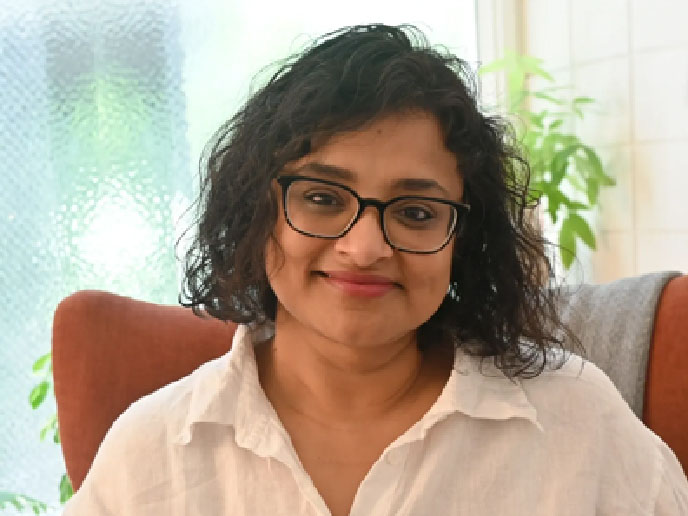
Moitreyee Chowdhury
LMFT 121934 · LPCC 9238 · EMDR
FOUNDER · COUPLES · INDIVIDUAL · FAMILY · TRAUMA
Founder and Clinical Director, practicing in California for over two decades. Works with adults, couples, and families on anxiety, trauma, depression, EMDR and OCD, with particular depth in South Asian and immigrant experience. Sessions in English, Hindi, and Bengali.
Your life is the Leela.
Shakespeare named it: all the world’s a stage. Sanskrit named it differently. Leela, the great unscripted play of life. The full, contradictory, sometimes devastating, sometimes luminous unfolding of a life being lived.
Leela is the frame this practice works within. Grief and joy, family loyalty and individual longing, the push and the pull are the story. The work is to engage with it more fully, more honestly, and with more companionship than you currently have.
South Asian tradition has held the full range of human emotional experience for thousands of years. The Natya Shastra, the ancient Indian treatise on dance, theater, the arts and emotional life, named nine rasas or emotional essences: love, humor, sorrow, heroism, fear, wonder, peace, and more. A complete map of the emotional life, held with dignity. Leela Mental Health draws on this as a philosophical touchstone, a way of meeting what you feel as something to be witnessed and engaged, carried forward into the full story.
“The goal is to live inside the story with more room than you currently have.”
Who we are
A practice that holds
the full weight of it.
Leela Mental Health was founded to hold South Asian life as it actually is, the family expectations and the individual longing, the intergenerational inheritance and the bicultural navigation, the grief and the love that are particular to this experience. These are not the background to clinical work. They are the clinical work.
The practice was founded by Moitreyee Chowdhury, LMFT, LPCC, a South Asian clinician who has lived on both sides of the ocean, in India and in the West, and who holds this cultural ground from the inside. As Leela grows, the team brings its own lived experiences to the work, the understanding is collective, not singular. When you come here, you do not have to begin by explaining yourself. The context arrives with you.
Named, not diagnosed.
Log kya kahenge
What will people say. The phrase is so ordinary in South Asian family life that it barely registers as a force until you try to make a decision your family would not approve of, and it is suddenly everywhere. It is in your chest before you speak. It is the voice that checks the thought before it becomes a sentence. Over decades, log kya kahenge becomes indistinguishable from your own judgment. Therapy creates the space to hear the difference.
Intergenerational inheritance
What your parents and grandparents carried — from displacement, from migration, from histories too large to speak — did not disappear. It traveled forward through the body, through silence, through the specific way distress expresses itself in South Asian families: the stomach that never quite settles, the sleep that never fully comes, the tension in the shoulders with no memory attached to it. You may be carrying something that was never yours to begin with. That is not a metaphor. That is how intergenerational patterns move.
The model minority
You have achieved every metric. You are in tech, in medicine, in law, or raising children who will be. And there is a hollowness underneath the achievement that no one around you has words for, because the narrative says this is what success is supposed to feel like. The Bay Area has a particular shape of this. The cost of performing excellence across decades for your family, for your workplace, for a country that has decided what you represent is given room here.
The permanent in-between
Too South Asian in America. Too American at home. For many clients, there is no position from which you are fully recognized not by the country you live in, not always by the family you return to. The in-between is not a temporary state. It is a permanent address. The work is not to resolve it but to live in it with more spaciousness than you currently have.
A region, not a single story
A vast region. Many languages.
One practice.
South Asia is a vast and plural region. Leela Mental Health serves individuals and families from across the subcontinent, and from diaspora communities around the world, including East Africa, the Caribbean, Fiji, the United Kingdom, and Canada. South Asian identity is not one thing. This practice does not treat it as one.
Faith, where it is part of a client’s life, is held with respect. No tradition is treated as the default. Clients from all religious backgrounds, and none, are received within their own framework.
Sessions are currently available in English, Hindi, and Bengali. As the Leela team grows, it will bring additional languages and lived cultural experiences to the practice. Clients whose language needs fall outside current offerings are supported with referrals when needed, given with care, not as a dismissal.
Clinical approach
East and West, held in
the same room.
The Leela Mental Health team integrates evidence-based Western clinical approaches — Eye Movement Desensitization and Reprocessing (EMDR), Cognitive Behavioral Therapy (CBT), Dialectical Behavior Therapy (DBT), and Family Systems frameworks — with an attentiveness to what South Asian clients often already carry: contemplative practices, expressive traditions, somatic wisdom, and community frameworks that have no equivalent in a clinical manual.
Many South Asian clients arrive with an existing practice, meditation, breathwork, prayer, mantra. The work at Leela meets what you already have and works alongside it. Simple somatic and mindfulness-based tools are offered for nervous system regulation. For clients without an existing practice, these are introduced at a pace that fits the person, not the protocol.
Distress in South Asian clients often shows up in the body first, physical tension, disrupted sleep, a heaviness that has no ready-made name. The body’s account of what has happened is received as clinical information. Sessions are held with a family systems lens: the family is in the room, even when only one person is seated there. Collaborative care with psychiatrists, primary care physicians, and school counselors is coordinated with your consent.
EMDR CBT DBT Family Systems Somatic Approaches Mindfulness & Meditation
Expressive Arts Collaborative Care
How we work together
Who we see.
Individual Therapy
One-on-one sessions for South Asian adults navigating anxiety, depression, identity, intergenerational patterns, and life transitions. In English, Hindi, or Bengali.
Couples Therapy
For South Asian couples navigating arranged and chosen relationships, cultural expectations, family pressure, and the distance between what is expected and what you actually need.
Family Therapy
For South Asian families holding multiple generations in the same room — parents, children, grandparents, and the weight of what has not yet been said between them.
Parenting Support
For South Asian parents raising children between two cultures — navigating identity, academic pressure, and the particular grief of watching your child become someone your own parents would not entirely recognize.
Teen Therapy
For South Asian teenagers managing academic pressure, family expectations, identity, and the experience of living between two worlds before they have words for either.
Young Adult Therapy
For South Asian young adults — college students, early-career professionals, first-generation graduates — carrying the weight of being the first, or the bridge, or both.
South Asian life has always been expressed.
Many clients arrive with this texture already woven through how they think and feel: a line from a film that names something therapy has not yet found words for, a poem in Hindi or Urdu that holds a grief English cannot quite reach, a piece of music that surfaces something the intake form never asked about. Literature, cinema, visual art, and music are part of how this community has always moved through what is hardest to hold. At Leela, that material is welcome in the room.
The practice name carries this. Leela — the play of life, the great beautiful story. The name is the philosophy.
The people who find this practice.
Leela Mental Health serves first-generation immigrants who have built entire lives in a new country without ever quite unpacking what they left behind. It serves second-generation adults — born here, raised between two worlds, fluent in both and fully at home in neither. It serves South Asian couples navigating arranged expectations and chosen love, and everything in between. It serves parents whose children are pulling away from a culture the parents sacrificed to give them. It serves students at Stanford and other Bay Area universities carrying the weight of being the first, of representing something larger than themselves.
Leela Mental Health serves LGBTQ South Asian individuals who are holding two things at once that their family has not been able to hold together: love for the family, and the full fact of who they are. That position is received here without asking anyone to resolve it. It serves South Asian diaspora communities whose sense of identity is layered across more than one migration, more than one displacement, more than one place called home.
“You do not have to explain your family before we can begin. The context is already in the room.”
Begin here
The work starts where you are.
Leela Mental Health serves clients in Palo Alto and across California via telehealth.
What clients ask most.
Leela Mental Health responds to every inquiry within 48 hours.
Do you offer sessions in Hindi, Bengali and Marathi?
Yes. Leela Mental Health offers psychotherapy sessions in English, Hindi, Marathi and Bengali by specific clinicians who speak those various languages. Emotional language is not always interchangeable, the word that names what you are carrying may surface more readily in the language where it was first formed. Clients may work in one language throughout, or move between languages as the session calls for it.
Do you work with South Asian families, not just individuals?
Yes. Leela Mental Health provides therapy for South Asian individuals, couples, and families. Family work holds multiple loyalties in the same room what the family needs, what each member carries, what the generational and cultural context asks of everyone present. Individual work integrates a systemic lens: the family is always in the room, even when only one person is there. Sessions can be conducted in English, Hindi, and Bengali, with the language chosen collaboratively.
What if my family doesn't believe in therapy?
This is one of the most common questions that brings South Asian clients to Leela Mental Health. The decision to begin therapy is frequently made privately, sometimes in tension with family expectations or cultural norms. You do not need your family’s permission or understanding to begin. Your confidentiality is protected by federal and California law. What you choose to share with family and when, remains entirely yours, at your pace.
Do you work with LGBTQ South Asian clients?
Yes. Leela Mental Health provides affirming therapy for LGBTQ South Asian individuals, couples, and families. The experience of holding a queer identity within a South Asian family context loving your family and needing a space where all of who you are is visible is received here. Sessions are available in English, Hindi, and Bengali.
What is the philosophy behind Leela Mental Health?
Leela Mental Health was built around a South Asian cultural framework from the inside. The name Leela is drawn from Sanskrit — the great unscripted play of life, the full living story. The clinical approach integrates Eastern and Western frameworks because the clients who come here are already living in both. Sessions in English, Hindi, and Bengali are offered because emotional material sometimes only exists in the language where it was first formed. The practice holds the full plurality of South Asian identity the region’s many nations, languages, faith traditions, and immigration histories as the starting point, not the footnote.
Do you serve South Asian clients from across the region, not only from India?
Do you integrate meditation or mindfulness into therapy?

Good Faith Estimate: You have the right to a written estimate of what your care will cost before your first session. Read the full Good Faith Estimate notice. Read the full notice ➞
988 Suicide & Crisis Lifeline
Free, confidential 24/7 support for people in distress. Call or text — they will answer.
Crisis Text Line
Free 24/7 text-based crisis support from a trained counselor.
Emergency Services
If you or someone else is in immediate danger, please call 911 or go to your nearest emergency room.
Something in this has been
waiting for a room where
it can be said plainly.
Reach out to Leela Mental Health team to determine whether this practice is the right place for what you are carrying.
When you are ready, this is where to begin.
We respond within 48 hours.