
ADHD therapy in Palo Alto for the brain that has been working twice as hard to look like everyone else.
For South Asian, East Asian, and immigrant children, teens, and adults whose ADHD makes complete sense once the full picture is visible. And for parents searching for a therapist who will understand their child without reducing them to a behavior problem.
In person in Palo Alto. By telehealth across California.
Sessions in English · Hindi · Bengali · Marathi · Cantonse · Mandarin · Spanish
Children
Teenagers
Young Adults
Adults
What Brings People Here
ADHD makes complete sense once
the full picture is on the table.
Here is what people actually describe.
The adult who learned to manage this before anyone had a name for it
Late Diagnosis · Adults · Masking
You were capable enough that the gap was rarely visible. Lists, reminders, arriving earlier than necessary, preparing more than the situation required. It worked, mostly. What it cost — in attention, in energy, in the part of the day spent managing rather than doing — was not something most people around you saw. Many adults who come to Leela Mental Health in Palo Alto are only now, in their thirties or forties, finding an accurate name for what they have been carrying for a long time.
Your child is being called difficult. You are not sure that is the right word.
Parents · South Asian & East Asian Families
Many South Asian and East Asian families arrive at ADHD after years of reading a child’s difficulty as a motivation problem — or after a school flag that reframed everything they thought they understood. Leela Mental Health works with families for whom ADHD is a new frame on a weight that has been present for a long time.
The anxiety was real. It was also carrying something else.
ADHD in Women · Inattentive Type
Inattentive ADHD in women is consistently missed. It presents quietly — as anxiety, perfectionism, being disorganized despite trying very hard. It does not look like the hyperactivity the research described. Many women at Leela Mental Health received an anxiety diagnosis first and found their way to understanding ADHD years or decades later. Both can be true at once, and both are worth clinical attention.
Your teenager is smart. The gap between that and their output is growing.
Teens · Bay Area Academic Pressure
Bay Area schools carry specific pressure. When a teenager with ADHD is navigating academic intensity, college timelines, and family expectation simultaneously — the experience is rarely just about attention. When difficulty is read as attitude, and when family honor is layered on top, the result is often shame that forms before any accurate understanding arrives.
Knowing exactly what needs to happen and still not being able to start it
Executive Function · Task Initiation · ADHD
The task is clear. You know what the first step is. You have thought about it more than once today. And the hour goes. For a lot of adults with ADHD — especially those in demanding roles in the South Bay who have always been described as capable — this is the part that is hardest to explain to someone who has not experienced it, because from the outside it looks like avoidance and from the inside it does not feel like a choice. The same pattern shows up in teenagers at Cupertino and Sunnyvale high schools sitting with a college essay they cannot begin. Leela Mental Health works with both.
Two sets of expectations, one nervous system
Cultural ADHD · Immigration · Intergenerational Pressure
In a lot of South Asian and East Asian households across Sunnyvale, Cupertino, and the wider Bay Area, difficulty concentrating was called something else — not trying hard enough, being distracted, not being serious about school. The concern was real. The framework just did not include ADHD. For adults who are only now putting an accurate name to something they have carried since childhood, there is usually a lot sitting underneath the diagnosis itself — years of a story that was built around the wrong explanation. That history is work Leela Mental Health does directly.
Recognizing the Pattern
What ADHD looks like
at home, at school, and at work.
Leela Mental Health works across the full range of ADHD presentations, inattentive, hyperactive-impulsive, and combined. These are the patterns that bring families and individuals to the practice. A formal diagnosis is not required before reaching out.
In children and teenagers

In adults — and what it has looked like for years
These patterns do not require a formal diagnosis before therapy begins. Leela Mental Health works with clients who have a confirmed diagnosis and those who are mid-evaluation or pre-evaluation. If you recognize several of these in yourself or your child, a free fifteen-minute consultation at (650) 206-9448 is the next step.
The Team
The people you’d be working with.
Leela was started because the existing options kept asking South Asian and immigrant clients to explain themselves before the real work could begin. Every clinician receives ongoing training and consultation in the communities we serve.
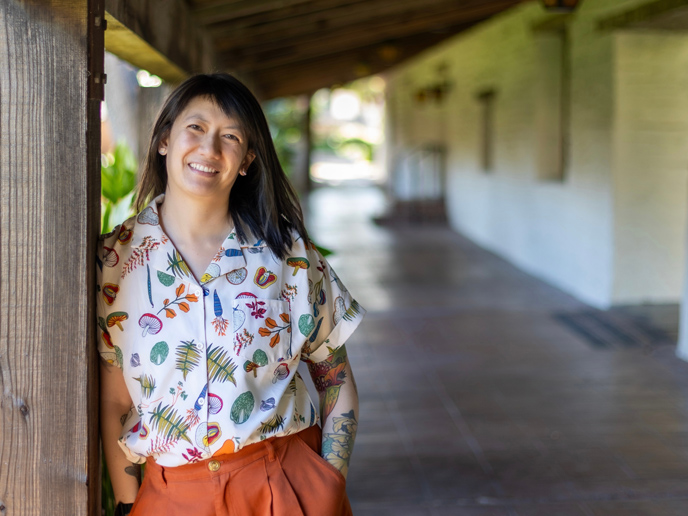
Shanise Mok
AMFT 164358 · SUPERVISED BY MOITREYEE CHOWDHURY, LMFT 121934
LGBTQIA+ · TEENS · ADULTS · COUPLES · TRAUMA
Queer-affirming therapy for teens, adults, older adults, couples, and people in all relationship structures. Works with gender and sexual identity, chronic health conditions, complex trauma, and BIPOC and immigrant experience.

Neeraja Muthal
AMFT 144185 · SUPERVISED BY MOITREYEE CHOWDHURY, LMFT 121934
COUPLES · INDIVIDUAL · FAMILY
Works with adults on anxiety, depression, trauma, grief, work stress, and relationship conflict, drawing on CBT, psychodynamic, and solution-focused approaches. A South Asian immigrant herself, she works closely with clients navigating culture, family expectation, and identity.
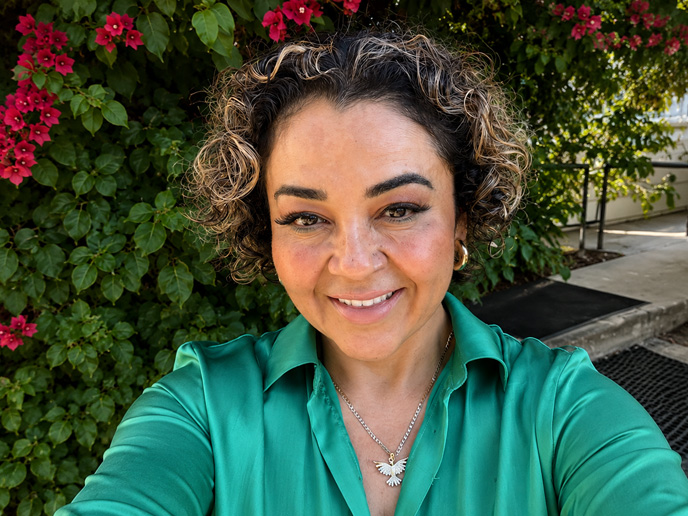
Teresa Gamez DePerez
LMFT 152063 · SPANISH
COUPLES · INDIVIDUAL · TRAUMA · GRIEF
Trauma-informed therapy for adults and couples working through anxiety, depression, infidelity, loss, and generational family patterns. A Latina therapist offering sessions in English and Spanish.
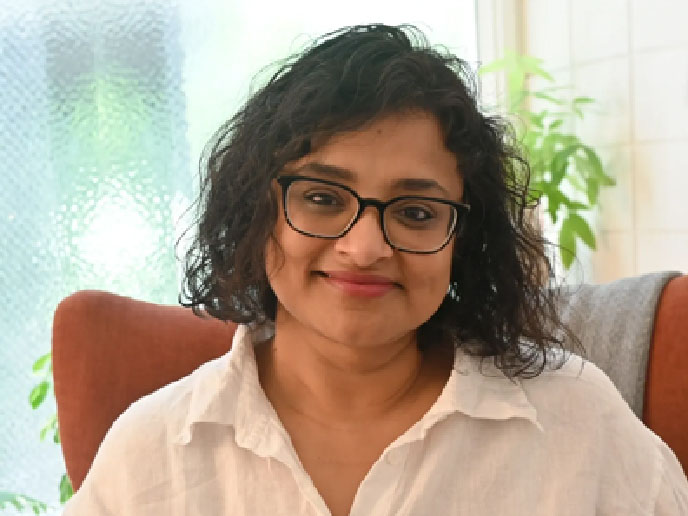
Moitreyee Chowdhury
LMFT 121934 · LPCC 9238 · EMDR
FOUNDER · COUPLES · INDIVIDUAL · FAMILY · TRAUMA
Founder and Clinical Director, practicing in California for over two decades. Works with adults, couples, and families on anxiety, trauma, depression, EMDR and OCD, with particular depth in South Asian and immigrant experience. Sessions in English, Hindi, and Bengali.
“ADHD therapy that does not require you to explain, apologize for, or prove the pattern you have already lived inside.”
Clinical Methods
Evidence-based approaches,
chosen for the person.
CBT
Cognitive Behavioral Therapy
Cognitive Behavioral Therapy examines the relationship between thought patterns and the ADHD behaviors they reinforce. For adults who arrived carrying years of self-blame — the belief that the difficulty is a character failing rather than a neurological pattern — Cognitive Behavioral Therapy makes that loop visible. For children and teenagers, it addresses the specific beliefs forming around ADHD before those beliefs harden into identity. At Leela Mental Health, Cognitive Behavioral Therapy is adapted to work alongside each client’s cultural values and family context — not against them.
DBT
Dialectical Behavior Therapy
Dialectical Behavior Therapy offers concrete, practicable skills for the moments when ADHD intersects with emotional intensity — when rejection sensitivity is activated, when frustration arrives faster than reasoning can catch it. At Leela Mental Health, Dialectical Behavior Therapy addresses a specific tension many South Asian and East Asian clients know: the expectation to maintain emotional steadiness inside communities and families where the rules about feeling are already strict. The skills create more room to move within those values, not outside them. Applied with adults and teenagers.
EMDR
Eye Movement Desensitization and Reprocessing
Eye Movement Desensitization and Reprocessing is used at Leela Mental Health where ADHD has a history embedded in it — the accumulated weight of being called careless or lazy, the academic experiences that became part of a self-story before any accurate explanation arrived, the early experiences of being out of step with the environment in ways nobody understood. Moitreyee Chowdhury is Trained EMDR for trauma. This approach reaches the places where shame is stored rather than simply spoken about, and is often the appropriate path when other approaches have reached a ceiling.
Family Systems
Family Systems Work
For many clients, ADHD does not exist independently of the family system — the parent who also carries it and was never told, the household patterns that formed before any clinical name existed, the expectations about attention and achievement that were built inside a family before ADHD was a frame. For families with a child or teenager who has recently been diagnosed, Family Systems work at Leela Mental Health addresses the dynamics forming around the diagnosis: what role the ADHD is being assigned inside the family, and what the family needs to understand before those assignments become permanent.
ADHD and anxiety often show up together. They are not the same thing, and treating them as one produces results that do not last.
In South Asian and East Asian communities, the pattern is especially common. Anxiety is the presenting concern — the one with a familiar name, the one the family understands, the one that already has a frame. ADHD runs underneath it unrecognized for years. Sometimes for decades. While the anxiety is treated in isolation, the underlying pattern continues unchanged.
Leela Mental Health works with clients navigating both. The clinical work distinguishes between what is driven by ADHD’s executive function and emotional regulation patterns, and what anxiety is generating on top. Treating them as the same thing produces results that do not hold. Cognitive Behavioral Therapy and Dialectical Behavior Therapy address both, applied to the specific intersection each client carries.
50%+
Adults with ADHD who also carry significant anxiety
Many arrive at ADHD therapy with an anxiety diagnosis already in hand. Both are real. The clinical work addresses both.
Years
The average gap before ADHD is recognized in high-achieving adults
Longer in South Asian and East Asian communities, where compensation strategies can keep the pattern invisible for a very long time.
3
Languages therapy is available in at Leela Mental Health
Leela Mental Health offers sessions in multiple languages. As the team grows, additional languages are being added.
Who Comes to Leela
ADHD at different chapters of life.

The adult who has been managing this alone for a long time
Adults · Late Diagnosis · High-Achieving
The career is established. The output is real. The systems that hold everything together have taken years to build, and most weeks they hold. Leela Mental Health works with adults who have been functioning at a high level for years and have arrived at a question that does not go away on its own: is this actually working, or is this just sustainable enough?
Therapy at Leela Mental Health does not require a diagnosis to begin. It requires an honest account of the patterns a person is actually navigating.

Children who are starting to be described in ways that do not quite fit
Children with ADHD often arrive at school already carrying a verdict — that they are disruptive, behind, or not trying. Leela Mental Health works with children on understanding how their mind works, building the skills attention and emotional regulation require, and changing the story forming about who they are. Developmentally adapted approaches are integrated into sessions for younger children.
The work is done in collaboration with parents, who receive guidance and practical tools alongside their child’s sessions. A parent consultation — without the child present — is available as a starting point when the child is reluctant or the parent needs to understand what they are seeing before anything else.
Parent-only sessions available as an entry point.

The teenager who is working harder than anyone around them realizes
Bay Area schools carry specific pressure. When a teen with ADHD is navigating academic intensity, college timelines, family honor, and the gap between who they are at home and who they perform at school — the experience is rarely just about attention. When difficulty is read as attitude, and when family expectation is layered on top, the result is often shame that consolidates before any accurate understanding arrives.
For parents whose teenager is resistant to engaging directly, a parent consultation without the teenager present is available and is often where the work begins. Sessions are available in multiple languages — contact us to confirm.
Parent consultation available when teens are reluctant to engage.

When the structure that made things work suddenly disappears
College, a first job, living alone for the first time — each one removes a layer of external scaffolding that was doing work the client may not have known it was doing. The schedule someone else set, the reminders someone else gave, the structure that kept the week organized. Without them, patterns that were manageable become harder to ignore.
Leela Mental Health works with young adults navigating this transition — whether ADHD is already named or still being understood. For families supporting a young adult in this stage, a parent consultation is also available to clarify what the clinical options are. Sessions are available in multiple languages — contact us to confirm.
Why Leela
What most therapy practices in the Bay Area are not set up to offer.
Some things you understand because you grew up inside them.
Moitreyee Chowdhury started Leela Mental Health in Palo Alto because she kept noticing the same thing: clients spending the first month of therapy explaining context that should have been the starting point. The South Asian family where mental health is not discussed. The parent in Cupertino who called it laziness because nobody had offered them a different word. The teenager at a Sunnyvale high school carrying a GPA and a secret. None of that needs explaining at Leela. It is already part of what we understand before the first session begins.
The approach depends on what you are actually carrying.
Some clients need to understand the thought patterns that have been reinforcing their ADHD for twenty years. Some need concrete skills for the moment frustration overtakes reasoning before they can name it. Some need to look at what the family system built around ADHD before anyone knew what it was. At Leela, the clinical approach follows what is actually present. When a formal evaluation is needed for school accommodations, medication, or documentation, we write the referral letter and coordinate with neuropsychologists, psychiatrists, school counselors, and IEP teams. Families do not have to manage the different parts of this process separately.
Sessions in the language you actually think in.
Leela Mental Health currently offers sessions in multiple languages, including English, Hindi, and Bengali. For clients who have spent years trying to describe something in a language that is not the one they feel it in, that matters more than it might sound. As the team grows, additional languages will be available. Let us know what you need when you reach out.
What people ask before reaching out.
I'm not sure if what I have is ADHD. Do I need a diagnosis before starting therapy?
My child was just evaluated and has a formal ADHD diagnosis. What can therapy do that the evaluation did not?
The evaluation and therapy serve different purposes and can run simultaneously. Leela Mental Health coordinates with neuropsychologists, pediatricians, and school teams when that supports what the family needs.
Can a therapist at Leela Mental Health diagnose ADHD?
A formal written ADHD diagnosis — for school accommodations, disability documentation, or medication evaluation — requires a licensed psychologist (PhD or PsyD) or licensed physician (MD or DO) with appropriate specialization. This is a California scope-of-practice matter. Leela Mental Health can prepare a clinical referral letter and maintains collaborative relationships with neuropsychologists in the Bay Area for referral and coordinated evaluation.
My teenager does not want to come to therapy. What can I do?
My child has not been evaluated yet. Can therapy begin before we have a formal diagnosis?
Why is ADHD in South Asian and East Asian communities identified so late?
At Leela Mental Health, this context is understood before the first session begins.
What is the connection between ADHD and anxiety?
I already have a diagnosis. What does therapy add?
Does Leela offer ADHD therapy by telehealth across California?
Does Leela accept insurance, or is this an out-of-network practice?
Leela Mental Health is an out-of-network (OON) practice, meaning the practice does not bill insurance directly. Session fees are shared during the free fifteen-minute consultation. The full fee schedule is on the Fees page.
If you have a PPO insurance plan: You may be eligible to submit a superbill — a detailed clinical receipt — to your insurer after each session for possible partial reimbursement. The amount depends entirely on your individual plan’s out-of-network benefits. Leela Mental Health cannot verify or guarantee reimbursement on your behalf. Use the benefits checker below to get an instant estimate of what your specific plan may cover before your first session.
If you have EAP or SHIP benefits: Leela Mental Health is in-network with Lyra Health EAP. Cardinal Care administered by Wellfleet (the Stanford student health insurance plan) is also accepted. Contact us to confirm your specific plan before booking.
If you are self-pay or uninsured: You have the right to a written Good Faith Estimate before your first session, as required by the No Surprises Act. Read the full notice →
For the most accurate picture of your out-of-network benefits, enter your insurance information in the benefits checker below— it provides an instant estimate at no cost and requires no commitment.

Good Faith Estimate: You have the right to a written estimate of what your care will cost before your first session. Read the full Good Faith Estimate notice. Read the full notice ➞
988 Suicide & Crisis Lifeline
Free, confidential 24/7 support for people in distress. Call or text — they will answer.
Crisis Text Line
Free 24/7 text-based crisis support from a trained counselor.
Emergency Services
If you or someone else is in immediate danger, please call 911 or go to your nearest emergency room.
Something in this has been
waiting for a room where
it can be said plainly.
Reach out to Leela Mental Health team to determine whether this practice is the right place for what you are carrying.
When you are ready, this is where to begin.
We respond within 48 hours.