Child and teen therapy in Palo Alto for the child who is carrying more than anyone around them can see.
And for the parent who needs somewhere to begin, before their child is ready.
Sessions in English · Hindi · Bengali · Marathi · Cantonse · Mandarin · Spanish
Children
Teenagers
Parent Consultations
LGBTQ+ Teens
What Brings Families Here
Child and teen anxiety makes complete sense once the full picture is on the table. Here is what parents actually describe.

Children · Ages 6–12

Teenagers · Ages 13–18
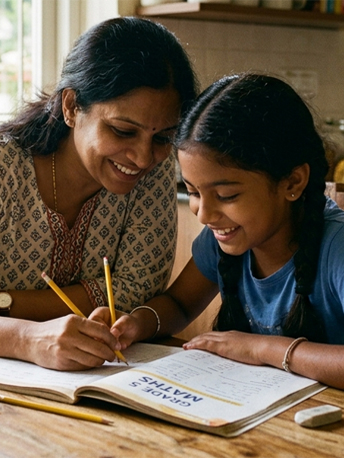
Parents · The ones carrying it
The grades are there. The child is not.
School Anxiety · Bay Area Academic Pressure
The GPA holds. The extracurriculars are full. But the Sunday night dread has become something else — physical symptoms before school, tears that are hard to explain, a child who used to love learning and now stares at the ceiling. Many immigrant and multicultural families across the Bay Area know this pattern. The school does not flag it because the output is still intact. What is not visible is the cost at which that output is being maintained — and that cost accumulates until something gives.
They have stopped talking about what is happening at school.
Withdrawal · Social Quieting
Not conflict, exactly — a quieting. The child who used to tell you everything now gives one-word answers. The teenager who always had friends is spending more time alone and will not say why. When you ask, they say they are fine. You know that is not the complete answer, and the gap between what you can see and what they will say is widening every week.
Your child knows exactly what they need to do. They cannot begin.
ADHD · Executive Function · School Flags
You have watched them sit at a desk for two hours and produce nothing — not from lack of intelligence, but from something that looks like avoidance from outside and does not feel like a choice from inside. The teacher has mentioned attention across consecutive reports. The gap between what your child is capable of and what appears on the page has widened past the point where effort alone is a solution. That gap has a name, and the name changes what is possible.
Nothing they do feels like enough — especially to themselves.
Perfectionism · Self-Criticism
The child who cries after a 94 because it was not a 100. The teenager who is harder on themselves than any teacher or parent has ever been. Perfectionism at this level is not high standards — it is a nervous system that has learned that anything less than perfect carries a cost. In immigrant and multicultural households across the Bay Area, this pattern often forms before the child has language for it, and consolidates quickly in school environments where the comparison pool is among the most competitive in the country.
They are caught between two versions of who they are supposed to be.
Cultural Identity · Bicultural Pressure
At home, one set of expectations. At school, another. And somewhere in the middle, a child who has not yet found a version of themselves that belongs fully in either room. For immigrant and multicultural families across the Bay Area — South Asian, East Asian, Iranian, Latino, and others — this tension is not abstract. It is the dinner table, the college conversation, the friend group, the mirror. The teenager who seems angry or withdrawn is often carrying the weight of code-switching between two worlds with no one who understands both at once.
Your child is carrying something that does not belong to them.
Family Stress · Intergenerational Weight
The weight of the migration story. The honor of the family name. The pressure of being the proof that the sacrifice was worth it. Children in immigrant households absorb these things before they can name them — and express them sideways, in anxiety, in perfectionism, in a body that is always slightly braced. At Leela Mental Health, this pattern is understood before the first session begins.
The Team
The people you’d be working with.
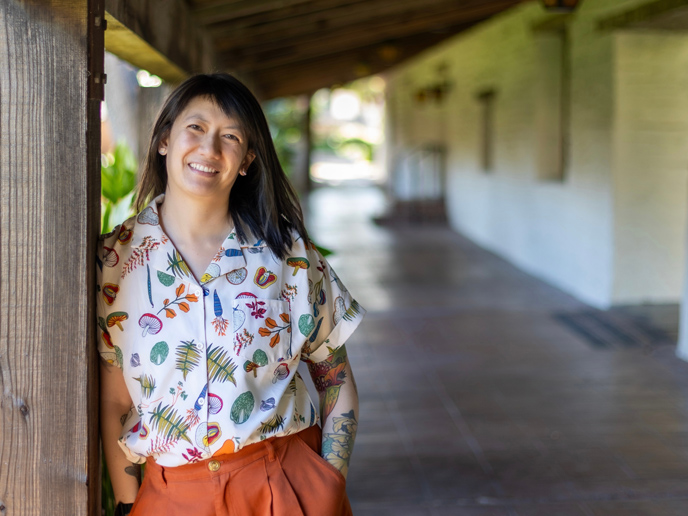
Shanise Mok
AMFT 164358 · SUPERVISED BY MOITREYEE CHOWDHURY, LMFT 121934
LGBTQIA+ · TEENS · ADULTS · COUPLES · TRAUMA
Queer-affirming therapy for teens, adults, older adults, couples, and people in all relationship structures. Works with gender and sexual identity, chronic health conditions, complex trauma, and BIPOC and immigrant experience.

Neeraja Muthal
AMFT 144185 · SUPERVISED BY MOITREYEE CHOWDHURY, LMFT 121934
COUPLES · INDIVIDUAL · FAMILY
Works with adults on anxiety, depression, trauma, grief, work stress, and relationship conflict, drawing on CBT, psychodynamic, and solution-focused approaches. A South Asian immigrant herself, she works closely with clients navigating culture, family expectation, and identity.
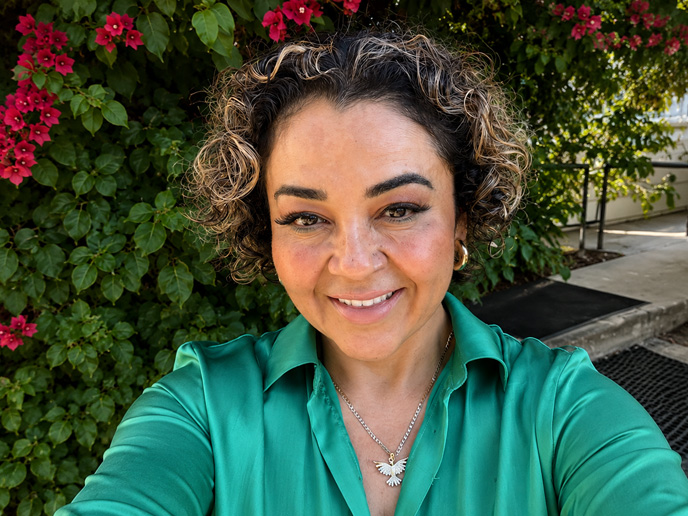
Teresa Gamez DePerez
LMFT 152063 · SPANISH
COUPLES · INDIVIDUAL · TRAUMA · GRIEF
Trauma-informed therapy for adults and couples working through anxiety, depression, infidelity, loss, and generational family patterns. A Latina therapist offering sessions in English and Spanish.
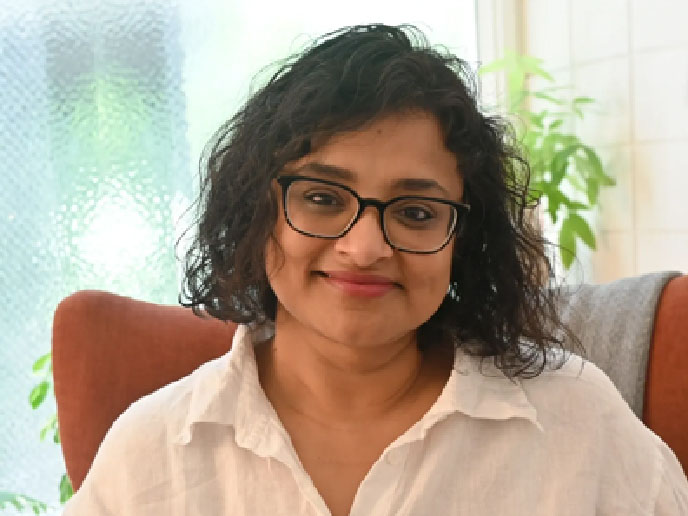
Moitreyee Chowdhury
LMFT 121934 · LPCC 9238 · EMDR
FOUNDER · COUPLES · INDIVIDUAL · FAMILY · TRAUMA
Founder and Clinical Director, practicing in California for over two decades. Works with adults, couples, and families on anxiety, trauma, depression, EMDR and OCD, with particular depth in South Asian and immigrant experience. Sessions in English, Hindi, and Bengali.
What it actually costs to grow up in two worlds at once.
Leela Mental Health was built for families navigating a specific convergence of pressures — some of the most competitive school environments in the country, inside households where the expectation is that a child will not just survive those environments, but lead them. This is the experience of many immigrant families across the Bay Area: South Asian families in Cupertino and Fremont, East Asian families in Sunnyvale and the South Bay, and families who came from Iran, the Philippines, Latin America, and beyond — any household where the distance between where the family came from and where it hopes to arrive is measured in a child’s GPA. The internal cost of that convergence is real, rarely visible, and almost never the thing a child is allowed to say out loud.
Truth 01
Mental health difficulty is not always named as such.
In many immigrant households — South Asian, East Asian, Middle Eastern, Latin American — anxiety is called overthinking, ADHD is called laziness, depression is called not trying hard enough. These interpretations are not cruel. They are the only frameworks available when no other language was offered. The child grows up believing the difficulty is a character flaw, not a pattern with a name and a clinical path.
Truth 02
Asking for help can feel like failing the family.
In communities built on sacrifice and migration, needing therapy can feel like evidence that something went wrong — with the child, with the parenting, with the family itself. This is true across cultures, and it is especially acute in first-generation households where the parents came here for the child’s future. So the child says they are fine. The parent searches alone at night. The gap between what is visible and what is real keeps widening.
Truth 03
The school pressure is not exaggerated.
Bay Area school districts — in Cupertino, Fremont, and elsewhere — concentrate high-achieving families from across the world. A child who would be thriving in most districts is in the middle of the pack here. The family expectation is calibrated to the top, whether that family came from Chennai, Seoul, Tehran, or Mexico City. The pressure is real, and so is the cost of carrying it alone.
Truth 04
Being the bridge is exhausting.
First-generation children function as cultural translators before they have language for what that requires — one register at home, another at school, a third in social contexts. This is the experience of children in immigrant families everywhere: Indian, Chinese, Korean, Iranian, Filipino, Mexican, Vietnamese. The continuous code-switching has a neurological cost. For children already navigating anxiety or ADHD, it multiplies what an already stressed nervous system is managing every day.
Truth 05
Intergenerational patterns travel quietly.
The vigilance, the drive, the hyperattunement to failure that a parent carries from their own history into the household — children absorb the residue of these patterns before they develop the capacity to name them. At Leela Mental Health, that residue is understood and worked with directly, not explained around.
Truth 06
The parent and the child are often carrying the same thing.
A parent who recognizes themselves in their child’s ADHD evaluation report is processing two things at once: the child’s present situation and a lifetime of their own unrecognized history. Both deserve clinical attention. At Leela Mental Health, the parent’s work and the child’s work are often inseparable — and the practice holds space for both.
What Leela Mental Health understands before you walk in the door.
Leela Mental Health was built to understand the cultural context that is already present before a family says a word — whatever that family’s background. The immigration story, the academic pressure, the privateness around emotional difficulty, the weight of being the first person in a family to sit in a therapist’s office — none of this requires explanation here. Whether a family came from India, China, Korea, the Philippines, Iran, or Latin America, the practice already holds what that means before the first session begins.
For children, the clinical work holds the family’s values, not in spite of them. For teenagers, it means a therapist who is genuinely on their side without being against the family. For parents, it means being heard without having to justify the decisions that led them here.
Sessions in English, Hindi, and Bengali — because the real conversation often happens in more than one language.
South Asian families · Bay Area Indian families · Silicon Valley East Asian families · Bay Area Chinese American families Korean American families Filipino American families Vietnamese American families Middle Eastern immigrant families Latino immigrant families · California mmigrant families · California First-generation children Bicultural identity Intergenerational trauma LGBTQ+ teens · Multicultural families Bay Area · Cupertino · Fremont · Sunnyvale · Palo Alto Hindi-speaking therapist California Hindi-speaking therapist California
LGBTQ+ Teens · Gender Identity · Cultural Identity
Some teenagers are holding more than one thing their family doesn’t have words for yet.
Your privacy · What stays in the room
What you bring in here stays here.
For teenagers who are not ready for their family to know something about them — whether that is their sexual orientation, their gender identity, or anything else they are still figuring out — confidentiality at Leela Mental Health is a clinical commitment, not just a legal requirement. Nothing is disclosed without your consent. If you are under 18, the specific boundaries of what parents are told and what remains private are explained clearly before the first session, so you know exactly where you stand before you say anything. You do not have to decide how much to share before you understand what it means to share it.
LGBTQ+ Teens · Gender Identity · Cultural Identity
You already know who you are. The hard part is figuring out how to hold all of it.
Being LGBTQ+ inside an immigrant household is its own specific experience — whether that family came from South Asia, East Asia, the Middle East, Latin America, or anywhere else where these conversations do not yet have a framework. It is not just about coming out. It is about navigating a family where what you are carrying may not yet have language, where the stakes of being known feel enormous, and where you are already carrying the weight of being the good child, the one who makes it work. Therapy at Leela holds all of that at once. You do not have to simplify any part of who you are to walk in the door.
Gender identity · Cultural expectation
When who you are doesn’t match the role you were handed before you could choose.
For teenagers navigating gender identity inside a cultural context with specific ideas about gender roles and family structure — the internal experience is often one of profound isolation. Not just because of the identity itself, but because there is no map for being this version of yourself inside this family. Leela Mental Health works with teenagers at this intersection without asking them to resolve it before they come in, without requiring the family to understand it first, and without treating the identity as the problem to be addressed. You are the person. The identity is part of you. The therapy starts from there.
For parents · Still finding the words
You love your child. You are also still making sense of something that arrived without a map.
For many immigrant and multicultural parents, a child’s LGBTQ+ identity arrives without a framework to hold it — in a community where it may not be discussed, inside a family where the rules about these things were never spoken aloud because they did not need to be. This is true across cultures, and each family’s version of it is shaped by where they came from and what they brought with them. Parent consultations at Leela Mental Health are a space to process honestly, to understand your child’s experience more fully, and to find a way forward that keeps the relationship intact. You do not have to have this figured out before you come in. Confusion, love, and the determination to get it right can all be in the room at the same time.
What anxiety, ADHD, and depression look like at home and at school.
In children ages 6–12

In teenagers ages 13–18
These patterns do not require a formal diagnosis before therapy begins. If you recognize several of these in your child, reach out to learn about the support we provide.
You do not need your child’s permission to get help first.
You come in first. You understand what is happening clinically. You receive guidance on how to approach the conversation at home. When the time comes, the path forward is already mapped — and the teenager who eventually walks in has a parent who understands what they are navigating.
This is especially useful for teenagers who have said no. And for immigrant and multicultural families where the idea of therapy is still being negotiated inside the household — often by the parent, alone, after everyone else has gone to sleep.
You come in alone
A 50-minute session. No child present. You describe what you are seeing, what you have tried, what your child has said about therapy. The clinician listens without judgment — and without the assumption that the family did something wrong.
You understand what is happening
You receive clinical context — not a diagnosis, but a framework. A more accurate way to hold what you are seeing. For parents whose only prior framework was a cultural one, this alone often changes what is possible at home.
You go home with a plan
Concrete guidance on what to say, what not to say, and how to reduce resistance rather than increase it. A standing appointment for when your child becomes willing.
Parent sessions continue in parallel
Even after a child begins their own therapy, parent sessions continue separately — because the family system is part of what changes. The parent’s own history, the household dynamics, the rules about emotion formed across generations — all of it is clinical material.
“Therapy for your child that does not require you to spend the first month explaining who your family is.”
Clinical Methods
Evidence-based approaches,
chosen for the child in front of us.
CBT
Cognitive Behavioral Therapy
For children and teenagers, Cognitive Behavioral Therapy makes the connection between thoughts, feelings, and behavior visible — in language and activities adapted to their developmental stage. For the child who catastrophizes test results, or the teenager who cannot stop the mental loop about what their classmates think, CBT creates space between the thought and the response. At Leela Mental Health, CBT is adapted to cultural context — the approach works alongside what the family brings, not against it. The child does not have to choose between getting better and being a good son or daughter.
DBT
Dialectical Behavior Therapy
Dialectical Behavior Therapy builds concrete, practicable skills for the moments when emotion is largest and reasoning is smallest. For teenagers navigating intense academic pressure, peer dynamics, family expectation, and questions of identity simultaneously — the skills of distress tolerance and emotional regulation are tools for the specific moments when everything feels like too much at once. At Leela Mental Health, DBT creates more room to move within a family’s values, not outside them.
EMDR
Eye Movement Desensitization and Reprocessing
EMDR is used where anxiety or behavioral difficulty has roots in earlier experiences — the accumulated weight of being called lazy or difficult, the school incident that was never processed, the early experience of not belonging in either world. For children and teenagers in immigrant and multicultural families, those earlier experiences often include the shame of being in difficulty in a household where difficulty was not supposed to exist. EMDR reaches the places where shame is stored rather than simply spoken about — and is often the right path when other approaches have reached a ceiling.
Family Systems
Family Systems Work
A child’s difficulty rarely exists independently of the family system around it. Family Systems work makes the dynamics visible — the roles assigned within the family, the rules about emotion and achievement, the patterns that formed across generations before this child was born. For immigrant and multicultural families in the Bay Area, this work holds the full complexity of the family’s cultural context without reducing any of it to pathology or asking anyone to abandon what they value. The goal is not to dismantle what the family has built. It is to understand which parts of it are no longer serving the child in front of you.
Why Leela
Three things Leela Mental Health
was built to be.
A place where families do not have to earn the right to be understood.
Something kept appearing in first sessions: parents spending the first month explaining context that should have been the starting point. The immigrant family where mental health is not discussed — and the parent who drove here anyway, alone, without telling anyone. The family who called it laziness because nobody had offered them a different word. The teenager at a Bay Area high school carrying a 4.2 GPA and a story nobody was asking about. None of that needs explaining at Leela Mental Health — whether a family came from India, China, Korea, Iran, the Philippines, or Latin America. It is part of what the practice was built to understand before the first session begins.
A clinical approach that follows what is actually in the room.
Some children need to understand the thought patterns forming around their anxiety before those patterns become identity. Some teenagers need concrete skills for the specific moment when emotion overtakes reasoning faster than they can name it. Some families need to see what the family system built around a child’s difficulty before anything else can shift. The method follows the person. When a formal evaluation is needed for school accommodations, 504 plans, or medication consideration, the practice prepares the referral and coordinates with neuropsychologists, psychiatrists, and IEP teams. Families do not manage these parts separately.
A practice where every part of who your child is belongs in the room.
Leela Mental Health is an inclusive and welcoming practice. A queer South Asian teenager, a child navigating gender identity inside a household that does not yet have words for it, a parent who is learning something about their child that is changing everything they thought they understood — all of them have a place here. Identity is not treated as the issue to be solved. It is part of the whole person the clinical work holds. Confidentiality for teenagers is a clinical commitment — nothing is disclosed without consent, including what the teenager is not ready to name at home.
1 in 5
Research from the CDC suggests roughly 1 in 5 U.S. adolescents experience anxiety symptoms — with rates often higher in high-pressure academic environments, including those common across the Bay Area.
The Gap
Anxiety and ADHD often go unaddressed for years in immigrant and first-generation households — because the external performance stays intact long after the internal cost has escalated.
3
Languages at Leela Mental Health — English, Hindi, and Bengali. For families in California where the real conversation happens in more than one language, a Hindi-speaking or Bengali-speaking therapist for children matters more than it might sound.
What people ask before reaching out.
Does Leela Mental Health offer child and teen therapy in Palo Alto?
Yes. Leela Mental Health offers therapy for children and teenagers in Palo Alto, Cupertino, Sunnyvale, and Fremont — in person and by telehealth across California. The practice works with school anxiety, ADHD, depression, social difficulty, and the pressures specific to Bay Area high-achievement households, including South Asian, East Asian, and immigrant family contexts. Parent consultations are available for families whose child is not yet ready to engage.
My teenager refuses to see a therapist. Can I come in alone?
Yes. A parent consultation , with you alone, without your child present, is a clinical starting point, not a waiting room. Many families at Leela Mental Health begin this way. You come in to understand what is happening clinically, receive guidance on how to approach the conversation at home, and map the path forward before the teenager has agreed to anything. For teenagers who are resistant, knowing the therapist will be on their side, not the family’s, not the school’s, is often the turning point. A parent consultation session is how you get to that door. Book an appointment to discuss whether this is the right first step for your family.
Is Leela Mental Health welcoming for LGBTQ+ teens and South Asian families?
Yes. Leela Mental Health is a fully welcoming and inclusive practice. The practice works with LGBTQ+ teenagers including those navigating sexual orientation and gender identity inside South Asian, East Asian, and immigrant family contexts where these conversations may not yet have a framework. Identity is not treated as the difficulty to be solved — it is part of who the person is, and it is held with respect from the first session. Confidentiality for teenagers is treated as a clinical commitment: nothing is disclosed without the teenager’s consent, including aspects of identity they are not ready to name at home. Parents navigating a child’s LGBTQ+ identity are also welcome for separate parent session.
Does Leela Mental Health understand South Asian and East Asian family dynamics?
Does my child need a formal diagnosis before therapy can begin?
Will the therapist coordinate with my child's school or pediatrician?
What does child and teen therapy cost, and does insurance cover it?
Leela Mental Health is an out-of-network provider — the practice does not bill insurance directly. Families with PPO plans may submit a superbill after each session for possible partial reimbursement; the amount depends on each plan’s out-of-network mental health benefits. Leela Mental Health is in-network with Lyra Health EAP, which some Bay Area tech-employed parents access through their employer. Wellfleet Cardinal Care (Stanford SHIP) is also accepted. A written Good Faith Estimate is provided before the first session as required by the No Surprises Act. HSA and FSA cards are accepted. Call (650) 206-9448 to discuss what your specific plan may cover.
Why do South Asian and East Asian children develop anxiety at higher rates in Bay Area schools?
Do you offer telehealth for children and teenagers across California?
Yes. Leela Mental Health offers HIPAA-compliant telehealth therapy for children and teenagers throughout California — including families in Cupertino, Sunnyvale, Fremont, San Jose, San Francisco, Los Angeles, and beyond. In-person sessions are available at 220 California Ave, Suite 105, Palo Alto, CA 94306. Telehealth is available to California residents only. For younger children, in-person sessions are often recommended for the initial phase.
My family does not talk about mental health. How do I start?
This is one of the most common things parents bring to a first consultation at Leela Mental Health. In many immigrant and multicultural households — South Asian, East Asian, Middle Eastern, and others — mental health is not discussed, and the decision to seek therapy is often made privately, against family expectation. You do not need your family’s agreement to begin. Your confidentiality is protected by federal and California law. A parent consultation is a private conversation — and many parents find that having a clinical framework for what they are watching makes the conversation at home significantly easier, because they are no longer trying to explain something they could not name.

Good Faith Estimate: You have the right to a written estimate of what your care will cost before your first session. Read the full Good Faith Estimate notice. Read the full notice ➞
988 Suicide & Crisis Lifeline
Free, confidential 24/7 support for people in distress. Call or text — they will answer.
Crisis Text Line
Free 24/7 text-based crisis support from a trained counselor.
Emergency Services
If you or someone else is in immediate danger, please call 911 or go to your nearest emergency room.
Something in this has been
waiting for a room where
it can be said plainly.
Reach out to Leela Mental Health team to determine whether this practice is the right place for what you are carrying.
When you are ready, this is where to begin.
We respond within 48 hours.