Trauma therapy for the life that carries more than the standard explanation covers.
Trauma therapy for the life that carries more than the standard explanation covers.
For South Asian, East Asian, and immigrant clients whose experience does not fit a single sentence. EMDR is the primary approach, guided by a therapist who understands what it costs to speak, and what it costs not to.
Sessions in English · Hindi · Bengali · Marathi · Cantonse · Mandarin · Spanish
What Brings People Here
Trauma does not always look like
what you have read about.
The memory that arrives without permission
Intrusive Memory · Flashbacks
A sound, a smell, a particular quality of light, and you are no longer where you are standing. The body goes somewhere the calendar cannot explain. This is not a failure of will. It is the nervous system doing what it learned to do, and it can be worked with differently.
A body still running the old protection
Hypervigilance · Somatic Response
Still braced. Still scanning. Still tensing before calls or conversations that should be ordinary. The threat passed, but the body’s account of it has not been updated. Leela Mental Health works with clients who are exhausted by a vigilance they cannot turn off.
Nights that surface what days manage
Sleep · Nightmares · Avoidance
Sleep that does not rest. Waking up already braced. Avoiding specific places, people, or conversations with a discipline that has its own cost. What has been held at careful distance during waking hours finds its way back. Leela Mental Health treats this as something that can shift, not as who you are.
The story that has never been spoken
Silence · Intergenerational · Unspoken
Carried for years, because saying it aloud would cost too much, to the family, to the version of yourself that has held things together, to the relationships that depend on not naming what happened. Leela Mental Health was built for exactly this weight. You do not need to explain the context before we begin.
The Team
The people you’d be working with.
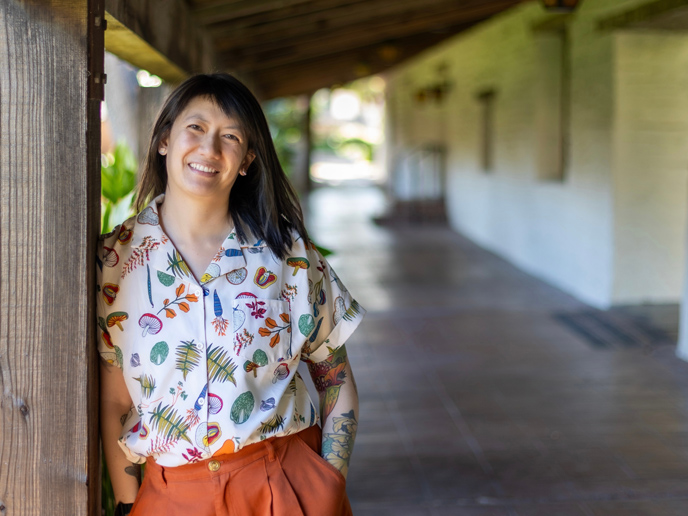
Shanise Mok
AMFT 164358 · SUPERVISED BY MOITREYEE CHOWDHURY, LMFT 121934
LGBTQIA+ · TEENS · ADULTS · COUPLES · TRAUMA
Queer-affirming therapy for teens, adults, older adults, couples, and people in all relationship structures. Works with gender and sexual identity, chronic health conditions, complex trauma, and BIPOC and immigrant experience.

Neeraja Muthal
AMFT 144185 · SUPERVISED BY MOITREYEE CHOWDHURY, LMFT 121934
COUPLES · INDIVIDUAL · FAMILY
Works with adults on anxiety, depression, trauma, grief, work stress, and relationship conflict, drawing on CBT, psychodynamic, and solution-focused approaches. A South Asian immigrant herself, she works closely with clients navigating culture, family expectation, and identity.
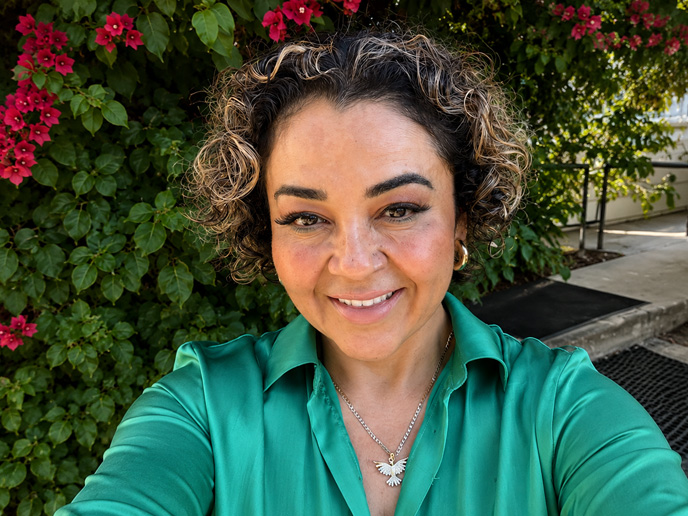
Teresa Gamez DePerez
LMFT 152063 · SPANISH
COUPLES · INDIVIDUAL · TRAUMA · GRIEF
Trauma-informed therapy for adults and couples working through anxiety, depression, infidelity, loss, and generational family patterns. A Latina therapist offering sessions in English and Spanish.
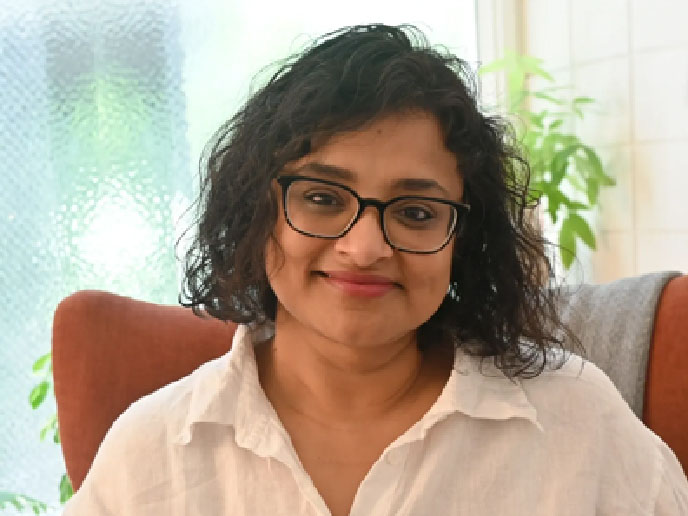
Moitreyee Chowdhury
LMFT 121934 · LPCC 9238 · EMDR
FOUNDER · COUPLES · INDIVIDUAL · FAMILY · TRAUMA
Founder and Clinical Director, practicing in California for over two decades. Works with adults, couples, and families on anxiety, trauma, depression, EMDR and OCD, with particular depth in South Asian and immigrant experience. Sessions in English, Hindi, and Bengali.
“Trauma therapy that does not require you to explain your whole background first.”
Clinical Methods
Evidence-based approaches,
chosen for the person.
EMDR · Primary Modality
Eye Movement Desensitization and Reprocessing
EMDR is the primary modality at Leela Mental Health for trauma and post-traumatic stress disorder work. Eye Movement Desensitization and Reprocessing was developed by Francine Shapiro and is recognized by the American Psychological Association, the World Health Organization, and the U.S. Department of Veterans Affairs as an evidence-based treatment for PTSD. The approach uses bilateral stimulation, typically guided eye movements, while a client holds a difficult memory in mind, allowing the brain to complete information-processing that was interrupted at the original experience. EMDR does not require detailed verbal narration, which makes it suited to clients for whom speaking carries additional cultural or relational cost. It is the approach for trauma that talking alone has not been able to reach.
CBT
Cognitive Behavioral Therapy
Cognitive Behavioral Therapy examines the conclusions formed around traumatic experience, about safety, self-worth, and others, that made sense then and no longer serve. For clients whose trauma has hardened into a particular story about what they deserve or what the world does, Cognitive Behavioral Therapy makes that loop visible. At Leela Mental Health, CBT is adapted to work alongside a client’s values and cultural frame, not against them — particularly for clients navigating the gap between what they were taught to believe and what their own experience tells them.
DBT
Dialectical Behavior Therapy
Dialectical Behavior Therapy provides specific, practicable skills for the moments when trauma responses are largest, when the nervous system is activated and the window for clear thinking has narrowed. At Leela, DBT addresses a particular tension many clients hold: the gap between the culturally expected response and the emotionally honest one. The skills give clients more room to move inside their own values. Dialectical Behavior Therapy is most useful in the first stage of trauma work, building enough internal ground before processing can begin.
Family Systems
Family Systems Work
Trauma does not always arrive from outside the family. And even when it does, it often lives inside family relationships long after. Family Systems work at Leela Mental Health attends to the roles, loyalties, and silences that shape what can be spoken and what gets carried instead, making those structures visible without blame. For many clients, the question of what to carry forward, consciously, is the most important work of the engagement. The goal is never to reject the family. It is to understand what was assigned before you had a choice.
Who Comes to Leela
Trauma at different chapters of life.

Carrying it while appearing to be fine
Adults 26+
The role is established. The responsibilities are met. The exterior is composed. And underneath, something has been running for years — a vigilance, a flatness, a sense that something essential has not yet been allowed to land. Leela works with adults who deliver, who show up, who manage and who have recognized that managing is not the same as being whole.

Between who was expected and who is actually there
Young Adults 18–25
The plan was clear. The execution is harder. And underneath the difficulty of the present, there is often something older, carried from childhood, from the household, or from a crossing that happened before memory. Leela works with young adults navigating both the pressure of becoming and the weight of what they brought with them.

Carrying things the family cannot yet acknowledge
Teenagers 13–17
Many teenagers in South Asian and East Asian households carry things that have no name inside the family — not because the family does not love them, but because naming would cost something. Leela Mental Health works with adolescents navigating this particular weight.
Some of what you carry arrived before you did.
Leela Mental Health holds a particular understanding of how trauma moves through South Asian, East Asian, and immigrant families, and the specific ways it is asked to stay silent.
Sessions Available In
English · Hindi · Bengali
· Cantonese· Mandarin
· Marathi · Spanish
Leela Mental Health currently offers sessions in English, Hindi, and Bengali. As the practice grows and new therapists join, additional languages will be added. Reach out directly to confirm current availability in your language.

If you are first generation, the crossing asked something of you — or of your parents — that was never fully accounted for. What you built here required holding things together. And somewhere in the holding, certain weight became yours to carry without a word for it.
If you are second generation, you may not have made that crossing yourself. But you may be carrying what the people who did could not put down. The silence in your household was not absence. It was a form of protection that cost something, and you may have inherited the bill.
The person who keeps everything together is often the last to ask for support. Leela Mental Health was built with that person in mind. Clients searching for a South Asian therapist, Indian therapist, or desi therapist in the Bay Area often find their way here because they need someone who understands this without needing it explained first.
Why Leela Mental Health
What makes this practice
different.
Room for the whole story, not just the part that translates easily.
Immigration history, intergenerational expectation, the weight of being the success story. These do not need to be explained from the ground up before the real work can begin. Leela Mental Health was built by someone who has lived inside that kind of story, which means less time spent establishing context and more time spent on what actually brought you here. This is not a claim to already know your story. It is a commitment to make room for all of it, as you tell it.
EMDR, for what has not moved through talking alone.
Eye Movement Desensitization and Reprocessing is the approach at Leela for trauma that talking alone has not been able to reach, in part because it does not require narrating what happened in detail. For clients from communities where disclosure carries its own cost, that can open up options that were not available before. It does not replace the value of putting things into words when a client is ready. It offers another way in when words are not where the work needs to start.
03
Sessions in English, Hindi, and Bengali, with more to come.
Clinical language does not always sit in the language a person thinks or feels in. Leela Mental Health offers sessions in Hindi, Bengali, Marathi, Mandarin, Cantonese and Spanish, as well as English. If working in a language other than English matters to you, say so when you reach out.
What people ask before reaching out.
What if I am not ready to talk about what happened?
The first stage of trauma work at Leela Mental Health focuses on building safety and internal resources before anything else is asked. What is shared, when, and in what language is always in the client’s hands. There is no timeline imposed from the outside, and no session that asks more than you can offer at that particular moment.
Do you offer therapy in languages other than English?
Yes. Leela Mental Health currently offers trauma therapy in English, Hindi, Bengali, Marathi, Cantonese, Mandarin and Spanish. As the practice grows and new therapists join the team, additional languages will be added. Please reach out directly to confirm current language availability before booking.
For many clients navigating trauma, the language in which something happened carries its own weight. Working in the language closest to the experience is not always just a comfort. For many clients it changes what can actually be said, and at Leela Mental Health that is treated as clinically relevant, not incidental.Sessions are available in-person at 220 California Ave, Suite 105, Palo Alto, and via HIPAA-compliant telehealth anywhere in California.
What is EMDR therapy and how does it work?
Leela Mental Health uses Eye Movement Desensitization and Reprocessing (EMDR) as the primary approach for trauma and PTSD work. EMDR was developed by Francine Shapiro and is recognized by the American Psychological Association, the World Health Organization, and the U.S. Department of Veterans Affairs as an evidence-based treatment for post-traumatic stress disorder. The approach uses bilateral stimulation typically guided eye movements while a client holds a difficult memory in mind. This allows the brain to complete information-processing that was interrupted at the moment of the original experience.
Moitreyee Chowdhury, LMFT and LPCC at Leela Mental Health, is Trained EMDR for trauma. EMDR does not require the client to narrate what happened in detail, which makes it particularly suited to clients for whom speaking carries additional cultural or relational cost. It is the approach for trauma that talking alone has not been able to reach.
How do I know if what I am carrying is trauma?
Trauma does not always announce itself clearly. A person may carry its effects for years without identifying them that way, particularly if what happened was relational rather than incident-based, gradual rather than sudden, or never named as significant by the people around them at the time. Common experiences that bring people to trauma work at Leela Mental Health include memories or images that return without invitation, a body that stays braced even in environments that are objectively safe, patterns of avoidance that have gradually narrowed daily life, and a sense of carrying something that has not yet been named.
Whether or not your experience meets a clinical threshold for post-traumatic stress disorder, if you are carrying something that costs you and that ordinary effort has not moved that is worth exploring.
What does trauma therapy cost? Does insurance cover it?
Leela Mental Health is in-network with Lyra Health EAP and accepts Cardinal Care administered by Wellfleet. Self-pay clients have the right to a written Good Faith Estimate before the first session, as required by the No Surprises Act. Full fee information is available on the Fees page.
What does the first session at Leela Mental Health feel like?
Does Leela offer telehealth trauma therapy across California?

Good Faith Estimate: You have the right to a written estimate of what your care will cost before your first session. Read the full Good Faith Estimate notice. Read the full notice ➞
Something in this has been
waiting for a room where
it can be said plainly.
Reach out to Leela Mental Health team to determine whether this practice is the right place for what you are carrying.
When you are ready, this is where to begin.
We respond within 48 hours.