
Depression therapy in the Bay Area for grief that has nowhere to go.
Sessions in English · Hindi · Bengali · Marathi · Cantonse · Mandarin · Spanish
What Brings People Here
Depression is what it looks like
when grief has nowhere to go.
Leela Mental Health was built for clients whose low does not look low on the outside, because they built the outside on top of it. The six patterns below are what clients describe in their own words, in their first sessions.
Presence & Absence
The mind that will not stop reviewing
It is 1 AM. You are replaying a work conversation from four days ago, cataloguing what you should have said, checking whether anyone noticed something you cannot name. The reviewing never produces a verdict. It just continues.
Withdrawal
Disappearing from relationships without meaning to
You don’t decide to pull away. It happens incrementally — a message you mean to reply to, a plan you mean to make. The people are still there. The reach required to actually be with them has become more than you have. You notice it. You don’t know how to stop it.
Exhaustion
Waking up tired
Not tired from doing too much. Tired from holding too much. You sleep, and wake up already behind. The heaviness is there before the day has asked anything of you. For many clients, this is the pattern that has been present the longest — and the one most easily explained away as just how things are.
Guilt & Shame
Carrying guilt about being low
You have things to be grateful for. You know this. You carry a list of reasons you should be fine. This makes it worse — the heaviness plus the guilt about the heaviness, proof, you tell yourself, that something is wrong with you rather than something is happening to you. It is not proof of that. Not at all.
Masking
Appearing fine while hollow inside
The performance is very good. The people who love you don’t see it. You have spent so many years making sure they don’t that the mask has become load-bearing — you’re not sure what would happen if you put it down. This is not weakness. This is what happens when feeling was never fully safe.
Somatisation
The body carrying what can’t be named
It arrives in your chest before your thoughts catch up. Headaches with no clear origin. A heaviness that sleep doesn’t touch. For many clients — particularly those from communities where emotional distress has no permitted language — the body becomes the place where what cannot be said gets stored. Leela Mental Health holds this, too.
The Team
The people you’d be working with.
Leela was started because the existing options kept asking South Asian and immigrant clients to explain themselves before the real work could begin. Every clinician here is hired with that same problem in mind.
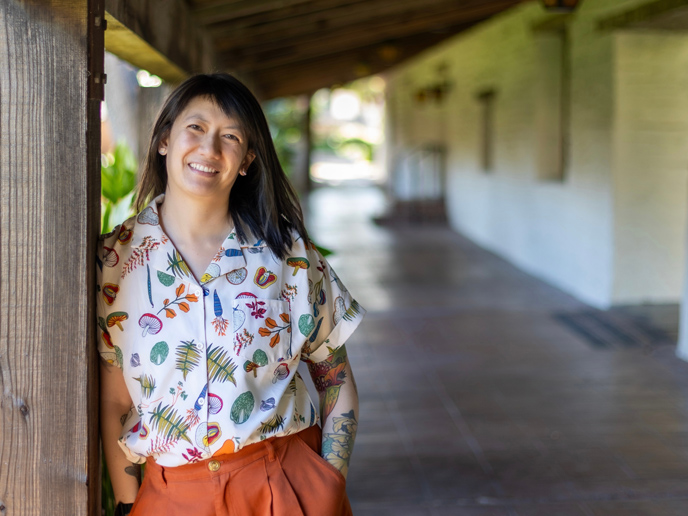
Shanise Mok
AMFT 164358 · SUPERVISED BY MOITREYEE CHOWDHURY, LMFT 121934
LGBTQIA+ · TEENS · ADULTS · COUPLES · TRAUMA
Queer-affirming therapy for teens, adults, older adults, couples, and people in all relationship structures. Works with gender and sexual identity, chronic health conditions, complex trauma, and BIPOC and immigrant experience.

Neeraja Muthal
AMFT 144185 · SUPERVISED BY MOITREYEE CHOWDHURY, LMFT 121934
COUPLES · INDIVIDUAL · FAMILY
Works with adults on anxiety, depression, trauma, grief, work stress, and relationship conflict, drawing on CBT, psychodynamic, and solution-focused approaches. A South Asian immigrant herself, she works closely with clients navigating culture, family expectation, and identity.
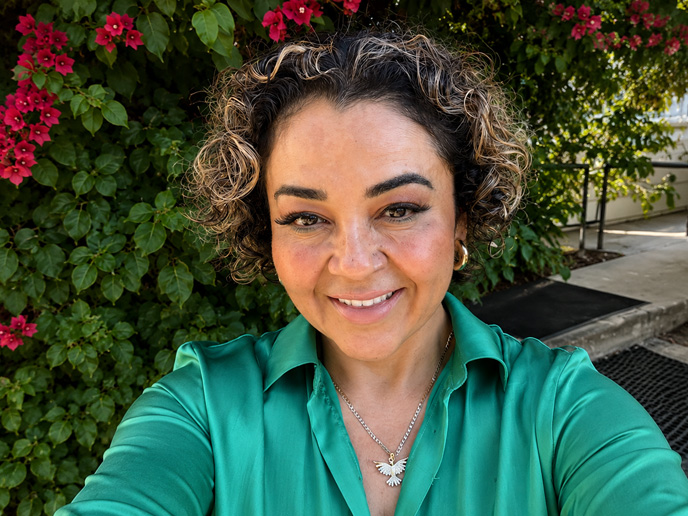
Teresa Gamez DePerez
LMFT 152063 · SPANISH
COUPLES · INDIVIDUAL · TRAUMA · GRIEF
Trauma-informed therapy for adults and couples working through anxiety, depression, infidelity, loss, and generational family patterns. A Latina therapist offering sessions in English and Spanish.
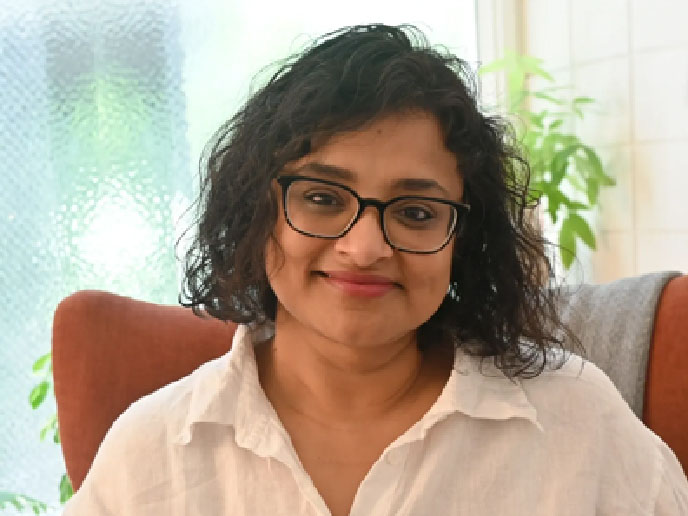
Moitreyee Chowdhury
LMFT 121934 · LPCC 9238 · EMDR
FOUNDER · COUPLES · INDIVIDUAL · FAMILY · TRAUMA
Founder and Clinical Director, practicing in California for over two decades. Works with adults, couples, and families on anxiety, trauma, depression, EMDR and OCD, with particular depth in South Asian and immigrant experience. Sessions in English, Hindi, and Bengali.
You don’t need to have the words before you make the call.
Clinical Methods
Evidence-based approaches,
chosen for the person.
CBT
Cognitive Behavioral Therapy
Cognitive Behavioral Therapy (CBT) examines the relationship between thought patterns and the low mood they sustain. For clients with persistent self-criticism, guilt that has no specific object, or the conviction that feeling low reflects a personal failing, CBT makes the loop visible. Once the pattern can be named, it can be interrupted. At Leela Mental Health, CBT is adapted to work alongside a client’s cultural values — not in opposition to them.
DBT
Dialectical Behavior Therapy
Dialectical Behavior Therapy (DBT) offers specific, practicable skills for the moments when depression is largest — when the emotion has occupied so much space there is no room for anything else. At Leela, DBT addresses a particular tension many clients know: the gap between the culturally expected response and the emotionally honest one. The skills give you more room to move inside your own life, not outside your values.
EMDR
Eye Movement Desensitization and Reprocessing
Eye Movement Desensitization and Reprocessing (EMDR) is used at Leela Mental Health for depression that has a history — early loss, immigration, relational ruptures, childhood experiences of not being enough, grief that was minimized by the family or by circumstance. When depression is rooted in experiences that were never fully processed, EMDR works at the level where those experiences are stored, not just discussed. Moitreyee Chowdhury is Trained EMDR for trauma.
Family Systems
Family Systems Work
For many clients, the depression is not only individual — it lives in inherited roles, in the rule that need is not permitted, in the pattern of being the strong one so that no one else has to be. Family Systems work at Leela Mental Health makes those structures visible without blame. The goal is not to reject the family. It is to understand what was assigned, so the client can decide — consciously, not by default — what to carry forward.
Depression does not arrive the same way in every family.
Leela Mental Health was built from the inside of the experience South Asian, East Asian, and immigrant clients bring. There is no intake session spent explaining the framework. The four patterns below are ones Moitreyee Chowdhury holds before you arrive.
Masking — appearing fine while hollow inside
The performance of fine is not vanity. It is often survival. In many South Asian and East Asian families, the display of need carries real cost — social, familial, professional. The result is a very capable exterior and an interior that has been running on empty for years. Leela Mental Health does not require you to perform wellness. You can arrive with the mask still on. We’ll work from there.
Somatisation — the body carries what can’t be named
In communities where emotional distress has limited permitted language, the body often becomes the designated carrier. Chronic headaches, digestive problems, unexplained fatigue, tension with no clear origin. Leela Mental Health approaches these not as separate from the depression but as part of it — the body’s version of the same story. EMDR and somatic awareness are part of the clinical work here.
Duty before self — depression read as ingratitude
Many clients were raised in cultures that defined personhood through contribution to the family. Feeling low is, in this frame, a failure of gratitude — a betrayal of the sacrifices that brought the family here. The guilt of depression on top of the depression itself is one of the heaviest things clients carry into first sessions at Leela. It is not proof of ingratitude. It is proof of how long this has been going on without support.
The shame of naming it — first-gen and immigrant families
For first-generation clients and the children of immigrants, reaching out for depression therapy can feel like confirming a fear — that you couldn’t carry what you were supposed to carry. Leela Mental Health was built for this specific weight. Seeking support is not a sign that something went wrong. It is often the first honest thing a person has done for themselves in years. The Bay Area office is here. The telehealth option is here. You don’t have to explain why it took this long.
Who Comes to Leela
Depression at different
chapters of life.

The professional carrying visible success and private weight
Leela Mental Health works with adults who deliver, who perform, who hold it together — and who have begun to understand that holding it together is not the same as being okay. Clients come from San Francisco, San Jose, Oakland, Mountain View, Menlo Park, and in person to the Palo Alto office.

The teen for whom achievement and low have become the same story
Leela Mental Health offers depression therapy for teens in Palo Alto in person and via telehealth throughout California. The approach is adapted to where a young person actually is — not where adults expect them to be. Parents can reach out directly to discuss whether this is the right fit.
What people ask before reaching out.
What does depression look like in South Asian and immigrant communities?
Is depression therapy at Leela available across the Bay Area?
How does Leela approach depression differently?
Can EMDR be used for depression?
Do you offer depression therapy for teens in the Bay Area?
Do you offer therapy in Hindi or Bengali for depression?
How do I get started with depression therapy?

Good Faith Estimate: You have the right to a written estimate of what your care will cost before your first session. Read the full Good Faith Estimate notice. Read the full notice ➞
988 Suicide & Crisis Lifeline
Free, confidential 24/7 support for people in distress. Call or text — they will answer.
Crisis Text Line
Free 24/7 text-based crisis support from a trained counselor.
Emergency Services
If you or someone else is in immediate danger, please call 911 or go to your nearest emergency room.
Something in this has been
waiting for a room where
it can be said plainly.
Reach out to Leela Mental Health team to determine whether this practice is the right place for what you are carrying.
When you are ready, this is where to begin.
We respond within 48 hours.