
The family you are raising
is also the one you were raised in.
For South Asian, East Asian, immigrant, blended, and multicultural families, navigating the distance between who everyone expected to become, and who is actually here.
Sessions in English · Hindi · Bengali · Marathi · Cantonse · Mandarin · Spanish
What Brings Families Here
The shape of family pain shifts.
The weight underneath it doesn’t.
Two cultures negotiating the same household
Acculturation gap · First & second generation · Extended family
You raised your children in a country that was not the one that formed you. The values you carried here — about sacrifice, obligation, what a good child looks like — are not wrong. They are also not translating. Your children are fluent in a register you still translate. And the family on a video call from the other side of the world still has opinions. Leela holds this without asking you to simplify it first.
The parent the child has stopped speaking to
Disconnection · Adolescence · The door that closed
Not a dramatic rupture. Just the answers that got shorter, the dinners that grew quieter, the door that stays closed more often. You remember when it was different and cannot locate the moment it changed. This is not a failure of love. It is two people operating from incompatible maps — and that gap can be worked with before it becomes the whole story between you.
The parent catching themselves
Intergenerational patterns · What got handed down
You hear your own parent in your voice. A tone, a silence, a reaction that arrived faster than you could think. What was done to you — or left undone — came into this family with you. Not because you chose to bring it. Because nobody gave you a way to put it down first. This work is about interrupting what was passed to you before you understood you were carrying anything.
Two families becoming one
Second marriage · Blended family · Stepfamily
You found each other after the first family ended. You both brought children, parenting styles, household rules, loyalties, and histories that had nothing to do with each other. Now they share a kitchen table. Blended families don’t struggle because anyone is wrong. They struggle because there was no time to design a shared story before it had already started.
The family reorganized around one person’s pain
Mental health in the family system · Walking on eggshells
One family member’s mental health challenges have quietly become the household’s organizing principle. Everyone calibrates — who can say what, when, in which tone. The care is real. So is the cost to the people doing the calibrating. Leela Mental Health works with families who want to understand what that dynamic has done to each person inside it.
The family that lives outside the tidy frame
Intercultural · Biracial · Interfaith · Cross-cultural
You married across cultures, faiths, or backgrounds. The children exist in a hyphen — two heritages, two sets of grandparents, two definitions of what family asks of you. Or a relationship arrived in the family that nobody planned for, and everyone is still learning how to hold it. Leela works with families writing a story that has no existing template.
The Team
The people you’d be working with.
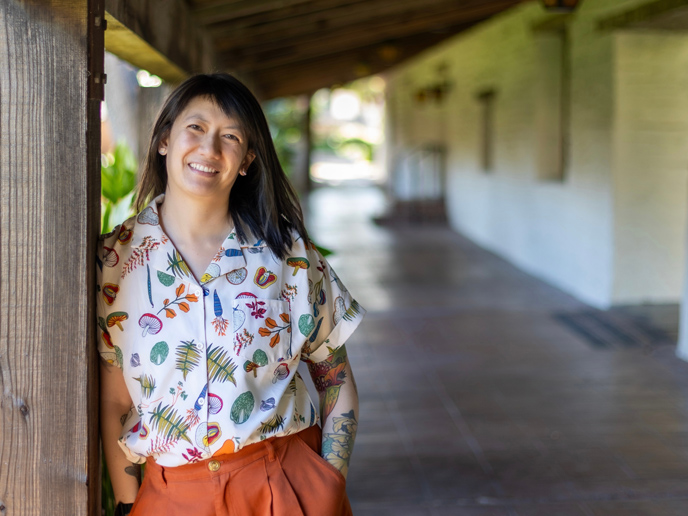
Shanise Mok
AMFT 164358 · SUPERVISED BY MOITREYEE CHOWDHURY, LMFT 121934
LGBTQIA+ · TEENS · ADULTS · COUPLES · TRAUMA
Queer-affirming therapy for teens, adults, older adults, couples, and people in all relationship structures. Works with gender and sexual identity, chronic health conditions, complex trauma, and BIPOC and immigrant experience.
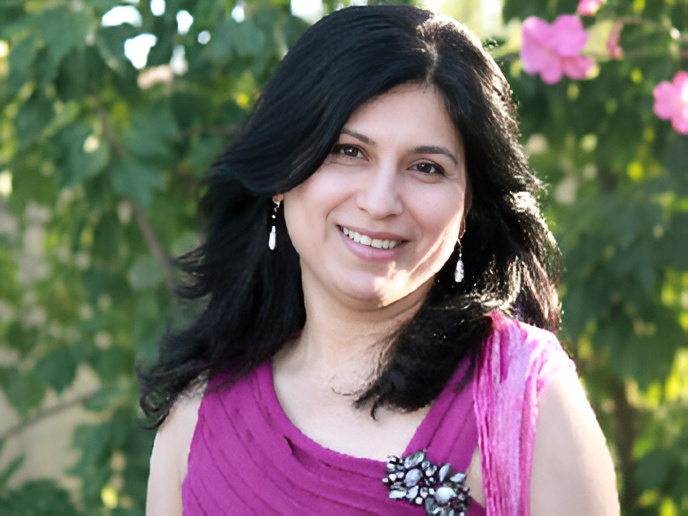
Neeraja Muthal
AMFT 144185 · SUPERVISED BY MOITREYEE CHOWDHURY, LMFT 121934
COUPLES · INDIVIDUAL · FAMILY
Works with adults on anxiety, depression, trauma, grief, work stress, and relationship conflict, drawing on CBT, psychodynamic, and solution-focused approaches. A South Asian immigrant herself, she works closely with clients navigating culture, family expectation, and identity.
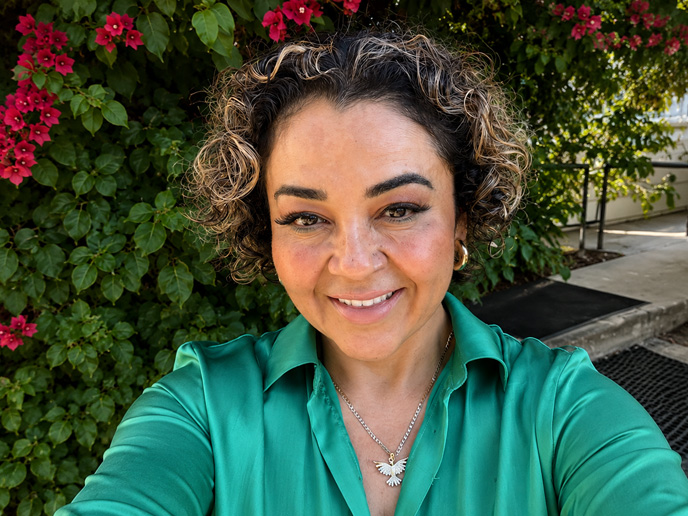
Teresa Gamez DePerez
LMFT 152063 · SPANISH
COUPLES · INDIVIDUAL · TRAUMA · GRIEF
Trauma-informed therapy for adults and couples working through anxiety, depression, infidelity, loss, and generational family patterns. A Latina therapist offering sessions in English and Spanish.
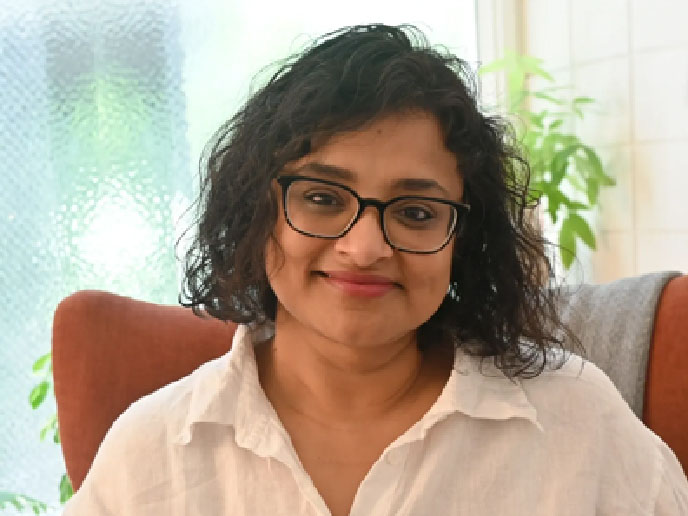
Moitreyee Chowdhury
LMFT 121934 · LPCC 9238 · EMDR
FOUNDER · COUPLES · INDIVIDUAL · FAMILY · TRAUMA
Founder and Clinical Director, practicing in California for over two decades. Works with adults, couples, and families on anxiety, trauma, depression, EMDR and OCD, with particular depth in South Asian and immigrant experience. Sessions in English, Hindi, and Bengali.
“Every family carries a story that started before anyone in it was born. That’s usually where we begin.”
In person · Palo Alto | Telehealth · California
How We Work
We start with the history,
not the presenting problem.
Where we begin
Family Systems
Before we look at what is happening now, we want to understand what each person brought in. What they learned about anger, silence, loyalty, and need in the family they grew up in. Who carried the worry in that household. Who smoothed conflict before it surfaced. Who was allowed to struggle and who had to hold everything together. Most families come in describing the fight they keep having. We are interested in what is running underneath it — because that is usually where the real work is. Family Systems is the frame from which everything else at Leela begins.
Narrative Therapy
Integrated with cultural work
Every family is living inside a story — about what the family is for, who each person is allowed to be, what the migration cost and what it was worth. Some of that story was written before anyone currently in the family had a say in it. Narrative Therapy, as we draw on it, helps families examine that story with some distance: which parts are still serving everyone, which parts arrived without consent, and what a different chapter might look like. For South Asian, East Asian, and immigrant families, this is not abstract. The story of the family often spans generations and continents. We hold all of it.
CBT & DBT
Cognitive and Dialectical Behavior Therapy
We use Cognitive Behavioral Therapy to look at the thought patterns generating the most friction — the assumptions each family member makes about what another person’s behavior means, the beliefs about obligation and loyalty that came from a different context and now cost more than they carry. DBT gives people practical tools for the moments when the conversation is hottest — when a parent is activated, when a teenager has shut down, when the same fight is happening again. Both are adapted to the cultural frame each family brings, not applied over it.
Who Comes to Leela
Family work at different points in the household’s story.
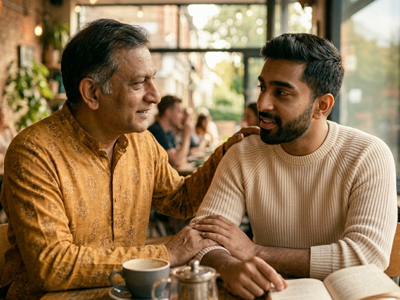
The immigrant family, one generation in
Parents who gave everything · Children becoming someone else
You sacrificed to give your children options you did not have. Some of those options are now the exact distance between you. Your child is becoming someone your own parents would not fully recognize — and someone you are still learning to know. Leela holds this particular grief, which is also a form of love, and which has no clean resolution — only the possibility of being held more consciously by everyone in the room.

The blended or stepfamily household
Two families learning to share a story they didn’t choose together
You chose each other. That choice brought your children into a family structure they did not choose. The loyalty binds are real — to biological parents, to former households, to the version of the family that existed before this one. Leela works with blended and stepfamilies in the years when the question is still open: what kind of family can we actually become?
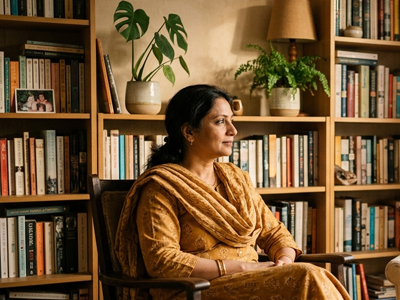
The parent coming in alone
One person trying to shift a system from inside it
Not everyone arrives with the family. Sometimes the parent comes first — because the teenager won’t come, or because the partner doesn’t believe in therapy, or because something in the household hasn’t been named yet and you need somewhere to think. One person doing things differently changes the room for everyone else in it. That is enough to begin.
Some of what this family is holding arrived before any of you did.
There is a particular weight that moves through families across generations — not always loud, often invisible to the people carrying it. It arrived before they had language for it, before they had choice, before anyone told them they were holding something that was not originally theirs.
Clients searching for a South Asian family therapist, East Asian family therapist, immigrant family counselor, or culturally informed parent counselor in the Bay Area often find Leela because they are looking for a practice where this territory is already familiar ground, not something that has to be introduced first.
South Asian families
For South Asian families, the household often carries the weight of intergenerational expectation, extended family involvement, and the particular pressure of being the proof of someone else’s sacrifice. The obligation between parents and children runs deep — and so does the cost when it cannot be spoken. That obligation sits at the center of the work here, not on the edges of it.
East Asian families
For East Asian families, silence in conflict often reads as withdrawal from the outside, but it is usually something learned, a habit from a household where keeping harmony was the rule. Face matters. The gap between what is felt and what can be said is real, and it accumulates over years. Leela holds these dynamics without requiring anyone to justify or explain them first.
Intercultural & blended families
For intercultural, biracial, and blended families — where two or more cultural scripts are running simultaneously — the question of what the family’s story actually is may not yet have an answer. The children exist in a hyphen that neither side of the family fully holds. Leela works with families who are still in the middle of writing it.
Further Reading & Listening
If you want to go deeper
before the first session.
Hold On to Your Kids
Gordon Neufeld & Gabor Maté
On why children increasingly turn toward peers and away from parents — and what pulls the attachment back. Resonant for immigrant parents watching their children grow toward a world that does not always include them.
My Grandmother’s Hands
Resmaa Menakem
On how trauma lives in the body across generations — not only as memory but as physiology. Written from the context of racialized trauma in America; the somatic framework it offers travels across experiences of inherited pain.
So We’ve Been Told
Sahaj Kaur Kohli · Brown Girl Therapy
On what it means to live between cultures — bicultural identity, family dynamics, and the stories children of immigrants are handed before they have a say in them. Made specifically for and from the South Asian diaspora experience.
Why Leela
What makes this practice
different.
Built with this territory in mind.
Leela Mental Health was founded with South Asian and immigrant family dynamics as a core frame — not an afterthought. Every clinician is hired with that same orientation in mind. That doesn’t mean any clinician already knows your family. Each family is its own story. It means this ground is not unfamiliar here, and you won’t spend the first sessions building that foundation from scratch.
Both levels — between people and within them — held together.
Most family conflict is not really about the topic on the table. It is about what each person brought in from before — what they learned about anger, silence, need, and loyalty in their own family. We hold both levels at once: what is happening between people now, and what each person was already carrying when they arrived. The two are always connected.
Language, where it matters.
For families where the most important things were said — or not said — in a language other than English, working in that language can change what becomes possible in the room. Sessions with Moitreyee Chowdhury are available in English, Hindi, and Bengali. Language availability varies by clinician. Let us know what you need when you reach out, and we will be honest about what is available.
What people ask before reaching out.
Does the whole family need to come to family therapy?
Leela Mental Health doesn’t require the whole family to be in the room from the start. Many parents begin alone — working through their own history and responses before bringing anyone else in. Sometimes that shift in one person is enough to change the dynamic at home. The format is shaped around what your family actually needs, and it can change as the work develops.
What is the difference between parent counseling and family therapy?
Leela Mental Health offers both, and the distinction matters. Parent counseling focuses on you — your history, your patterns, the way your own upbringing shows up in how you parent now. Family therapy brings two or more family members into the room together to work on what is happening between them. For many South Asian and immigrant families, parent counseling comes first. One person beginning to understand their own inherited patterns often makes the broader conversation possible.
Does Leela work with blended families and stepfamilies?
How does Leela approach South Asian and East Asian family dynamics?
What does the first session feel like?
Leela Mental Health uses the first session to understand the full picture before anything else. That means hearing the history of the family — not just what is happening right now, but what each person brought in from their own family of origin, and the cultural context that shapes how this household works. It is a conversation, not a checklist. It moves at a pace that fits the people in the room.
What does family therapy cost, and does insurance cover it?
Leela Mental Health is in-network with Lyra Health EAP and Wellfleet Student Health Insurance (for Stanford University Students), with specific clinicians. All other plans are out-of-network. Leela works with Thrizer to help clients understand their out-of-network benefits and submit for potential reimbursement — though reimbursement is never guaranteed and depends entirely on your plan. Fees are due at the time of service. A Good Faith Estimate is available on request. Full fee information is on the Fees & FAQ page.
Does Leela offer family therapy by telehealth across California?
Leela Mental Health offers family therapy and parent counseling by secure telehealth to clients throughout California. In-person sessions are available at 220 California Avenue, Suite 105, Palo Alto. Telehealth is available to clients in San Francisco, Berkeley, Oakland, San Jose, Los Angeles, Sacramento, and anywhere else in California. For families where members are in different locations, telehealth sessions can be structured to fit. Language availability varies by clinician — please ask about this when you reach out.

Good Faith Estimate: You have the right to a written estimate of what your care will cost before your first session. Read the full Good Faith Estimate notice. Read the full notice ➞
988 Suicide & Crisis Lifeline
Free, confidential 24/7 support for people in distress. Call or text — they will answer.
Crisis Text Line
Free 24/7 text-based crisis support from a trained counselor.
Emergency Services
If you or someone else is in immediate danger, please call 911 or go to your nearest emergency room.
Something in this has been
waiting for a room where
it can be said plainly.
Reach out to Leela Mental Health team to determine whether this practice is the right place for what you are carrying.
When you are ready, this is where to begin.
We respond within 48 hours.