
Something changed. You thought you’d know who
you were on the other side.
Sessions in English · Hindi · Bengali · Marathi · Cantonse · Mandarin · Spanish
What Brings People Here
Most people who come here
aren’t falling apart.
They just don’t recognize their life anymore.
Something didn’t make it all the way across with you
Immigration · Displacement
You are here. The paperwork is done, the address is set. And yet there’s a version of yourself that stayed somewhere else — in the language you think in, in the person you were before the crossing, in the relationships that didn’t require any translation. Immigration doesn’t end when you arrive.
The work stopped being enough — and you can’t explain why
Career · Identity
You followed the plan. Built the career. Delivered on every metric that mattered. And then — without warning, or very slowly over years — the thing you built started to feel like someone else’s life. It wasn’t a failure. It was a shift. And the shift has no job title or clear next move.
A loss that doesn’t have a clean shape
Grief · Loss
A parent. A marriage. A version of the future you’d already started planning for. Sometimes it’s a death. Sometimes it’s the ending of something that never had a name — a country you can’t return to, a self you were before something changed. Grief doesn’t need a clean cause to be real.
A relationship changing shape around you
Relationships · Family
A partner who feels like a stranger after years of closeness. Children leaving home and taking the structure with them. A parent aging in a way that reverses long-held roles. Relationship transitions don’t only change the relationship — they change who you are inside it, and who you are when you step outside it.
Not sure which version of yourself you’re allowed to become
Identity · Belonging
Some people arrive at a major transition carrying an older question underneath it: who am I when I stop performing the person I was expected to be? That question doesn’t always have a cultural label. But it often has roots — in family, in history, in what was modeled before you had a choice about it.
A decade that doesn’t look like the plan
Life Stage · Becoming
The midpoint that arrived before the things that were supposed to anchor it. The recognition that what you optimized for, you’re not sure you actually wanted. This is not a crisis. It’s a quieter kind of disorientation — and often the hardest one to bring into a room and say plainly.
The Team
The people you’d be working with.
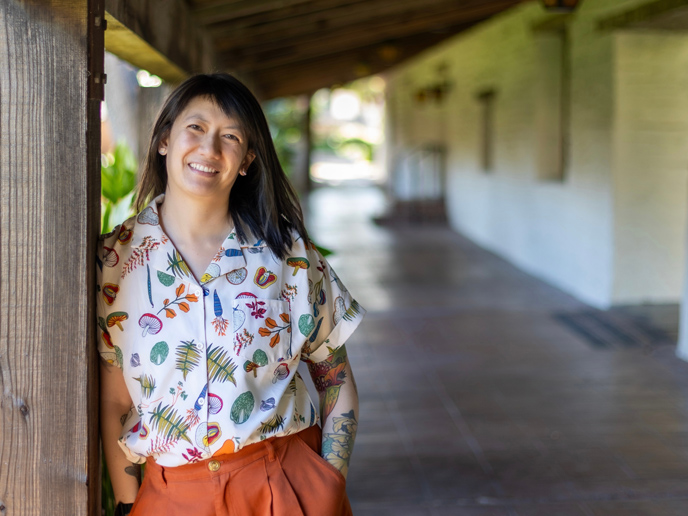
Shanise Mok
AMFT 164358 · SUPERVISED BY MOITREYEE CHOWDHURY, LMFT 121934
LGBTQIA+ · TEENS · ADULTS · COUPLES · TRAUMA
Queer-affirming therapy for teens, adults, older adults, couples, and people in all relationship structures. Works with gender and sexual identity, chronic health conditions, complex trauma, and BIPOC and immigrant experience.
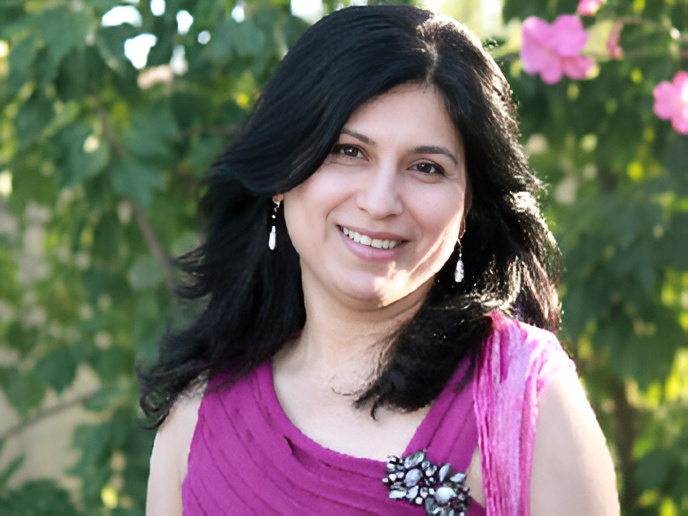
Neeraja Muthal
AMFT 144185 · SUPERVISED BY MOITREYEE CHOWDHURY, LMFT 121934
COUPLES · INDIVIDUAL · FAMILY
Works with adults on anxiety, depression, trauma, grief, work stress, and relationship conflict, drawing on CBT, psychodynamic, and solution-focused approaches. A South Asian immigrant herself, she works closely with clients navigating culture, family expectation, and identity.
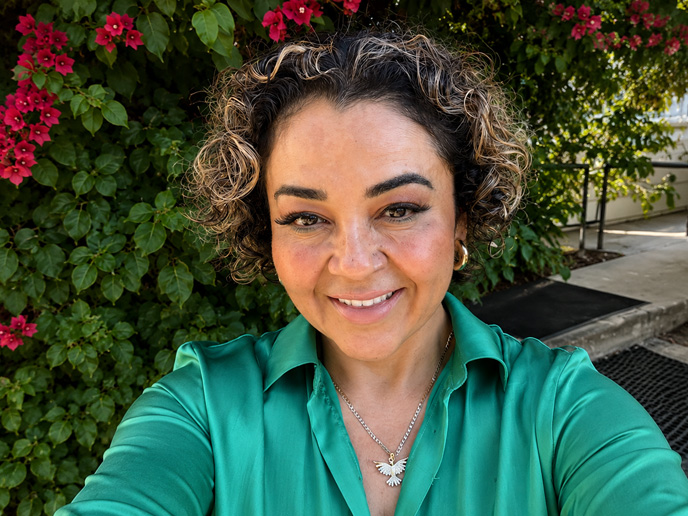
Teresa Gamez DePerez
LMFT 152063 · SPANISH
COUPLES · INDIVIDUAL · TRAUMA · GRIEF
Trauma-informed therapy for adults and couples working through anxiety, depression, infidelity, loss, and generational family patterns. A Latina therapist offering sessions in English and Spanish.
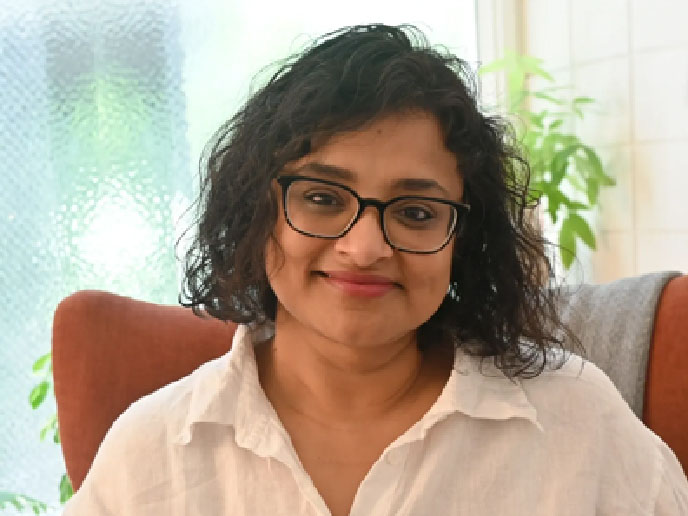
Moitreyee Chowdhury
LMFT 121934 · LPCC 9238 · EMDR
FOUNDER · COUPLES · INDIVIDUAL · FAMILY · TRAUMA
Founder and Clinical Director, practicing in California for over two decades. Works with adults, couples, and families on anxiety, trauma, depression, EMDR and OCD, with particular depth in South Asian and immigrant experience. Sessions in English, Hindi, and Bengali.
“You won’t have to start from the beginning. But your story is always your own — that’s what the work is for.”
In person · Palo Alto | Telehealth · California
South Asian, East Asian & Immigrant Clients
This practice was built for clients carrying particular kinds of weight.
What follows are some of the experiences that come up. They won’t all apply to you. They’re offered as recognition, not description.
Some transitions carry the weight of everyone watching
A career change, a divorce, a decision to live differently — for some clients, these don’t happen in private. They land inside a family or community system that has its own expectations, and sometimes a strong opinion about the right answer. The transition you are navigating is also, at the same time, a negotiation with people whose approval you may have carried your whole life.
At Leela, you don’t have to justify the difficulty of that before we can begin. It is already understood as part of the territory.
Some people arrive here having managed everything alone for a long time
There are clients who grew up in households — or cultures, or families — where the expectation was that hard things are endured quietly. Where staying composed was a form of care for others. Where asking for help with something this personal felt like a burden, or a sign of weakness, or a breach of something unspoken.
The transition becomes harder not because it is objectively worse, but because the entire structure of what you were taught tells you to handle it without help. Recognizing that pattern is sometimes the first thing that changes.
Some losses compound each other
For clients who immigrated, or whose families did, a new transition can reactivate something older — the original grief of what was left behind, the version of yourself that existed before the crossing, the relationships that didn’t survive the distance. A job loss or a divorce or a parent’s death doesn’t just bring its own grief. It can bring the earlier one too.
You are not overreacting. You may be carrying more than one thing at once. That is something therapy at Leela can hold directly, not as a complication, but as part of the work.
Some clients arrive at a transition carrying an older question underneath it
For some people — particularly those who grew up between cultures, or between the expectations of their family and the life they were building — a major transition surfaces something that was always there: the question of which version of yourself you are allowed to become.
That question doesn’t always have a tidy cultural label. But it often has roots — in what was modeled, in what was expected, in what was never said out loud but understood by everyone. Leela makes room for that question without requiring you to resolve it before the session starts.
Clinical Methods
Evidence-based approaches,
chosen for what the transition requires.
CBT
Cognitive Behavioral Therapy
Transitions generate thought patterns that are difficult to interrupt alone — loops about what you should have done differently, about what the change says about who you are, about whether you are making the right choice. Cognitive Behavioral Therapy makes those patterns visible and provides specific tools to work with them. At Leela, CBT is applied alongside a client’s values and context, not against them.
DBT
Dialectical Behavior Therapy
Major transitions can generate more emotion than the usual capacity for regulation can hold. DBT offers practical, specific skills for those moments — when grief, fear, or anger is too large and the window for clear thinking has closed. At Leela, DBT also addresses a tension some clients know well: the gap between the response that is expected and the one that is actually true. The skills create more room to move — inside your values, not outside them.
EMDR · Moitreyee Chowdhury, LMFT #121934
Eye Movement Desensitization and Reprocessing
Some transitions are difficult not only because of what is happening now, but because of what they activate from earlier — a previous loss, a relational rupture, an experience the nervous system never fully processed. EMDR is available at Leela for transitions with that historical charge. Moitreyee Chowdhury is Trained EMDR for trauma. This modality is offered specifically by her, not by all clinicians at the practice.
Family Systems
Family Systems Work
For many clients, a major life transition does not happen outside the family system — it happens inside it. The roles assigned across generations, the rules about who is allowed to change and how, the way a parent’s expectations become the voice in your head during a career shift or a divorce. Family Systems work makes those structures visible without assigning blame. The goal is not to leave the family. It is to understand what was inherited, so you can decide what to carry forward.
Who Comes to Leela
Transitions at different
chapters of life.

The transition that success didn't prepare you for

Between the plan and what is actually happening

When a transition is also a relationship question
Why Leela
What makes this practice
different from the standard offering.
You won’t spend the first month explaining who your family is.
Most practices describe cultural competence as a feature. At Leela, it is the structure the work is built on. Every clinician is hired specifically for their experience with South Asian, East Asian, and immigrant clients — not trained in it via workshop after the fact. You come in and the work starts. You don’t have to earn the right to be understood first.
The transition itself is the subject — not a stressor that produced symptoms.
Many approaches treat life change as the backdrop to symptom treatment. The anxiety came from the transition — so let’s treat the anxiety. At Leela, the transition is the clinical territory: what it restructured, what it cost, what it is asking of you now. That distinction changes what gets examined and how long the work takes.
Sessions in English, Hindi, and Bengali — actually, not symbolically.
For clients who think in one language and present in another, working in Hindi or Bengali changes what can be named in a session. It is not a small accommodation. If you want to work in Hindi or Bengali, say so when you reach out. We will make it happen.
What people ask before reaching out.
What is life transitions therapy and who is it for?
I'm not in crisis — I just feel lost after a major change. Is that enough?
Leela Mental Health works with many clients who describe their presenting concern not as crisis but as disorientation — a persistent sense that they no longer recognize their own life, or are not sure who they are on the other side of something that changed. That experience is clinically meaningful, even without dramatic symptoms. Many clients at Leela have spent years putting off therapy because their distress was invisible from the outside, or because they could not name a single cause. Feeling lost after a major change — whether that change was chosen or not — is real and workable.
Can therapy help with immigration as a life transition?
How is life transitions therapy different from general therapy?
Does Leela offer telehealth for life transitions therapy across California?
What does life transitions therapy cost at Leela Mental Health?
Leela Mental Health is an out-of-network practice, meaning the practice does not bill insurance companies directly. Clients with PPO insurance plans may submit a superbill for possible partial reimbursement; the amount depends entirely on individual plan benefits. Leela Mental Health cannot confirm coverage or reimbursement rates on a client’s behalf, and reimbursement is never guaranteed. Leela Mental Health is in-network with Lyra Health EAP and accepts Wellfleet Cardinal Care for eligible Stanford and UC Berkeley students. Self-pay clients have the right to a written Good Faith Estimate before the first session, as required by the No Surprises Act. Full fee information is on the Fees and FAQ page.

Good Faith Estimate: You have the right to a written estimate of what your care will cost before your first session. Read the full Good Faith Estimate notice. Read the full notice ➞
988 Suicide & Crisis Lifeline
Free, confidential 24/7 support for people in distress. Call or text — they will answer.
Crisis Text Line
Free 24/7 text-based crisis support from a trained counselor.
Emergency Services
If you or someone else is in immediate danger, please call 911 or go to your nearest emergency room.
Something in this has been
waiting for a room where
it can be said plainly.
Reach out to Leela Mental Health team to determine whether this practice is the right place for what you are carrying.
When you are ready, this is where to begin.
We respond within 48 hours.
Related services
Anxiety & Burnout
For the exhaustion of carrying more than the standard explanation covers — high-functioning anxiety, tech worker burnout, the cost of performing fine.
Family Therapy
For the extended family system — parents, adult children, and the relationships between generations.
Trauma & EMDR
For relational triggers that are larger than the present moment — stored responses that require specific processing.
South Asian Therapy
The practice built for South Asian, East Asian, and multicultural clients navigating the full weight of where they came from.