Fertility therapy in Palo Alto for everything the treatment plan does not have a line for.
What Brings People Here
The medical side has a protocol.
The rest of it does not.
A life organized around a calendar you did not choose
Treatment Cycles · Uncertainty
Monitoring appointments before work. Injections timed to the hour. Travel and holidays and your sister’s wedding, all arranged around a cycle that may or may not work. The waiting has its own particular quality, somewhere between hope and bracing, and it is difficult to explain to anyone who has not done it.
Grief that nobody scheduled a gathering for
Pregnancy Loss · Miscarriage
A loss early enough that most people never knew, or late enough that they did and have since moved on. There was no funeral, no ritual, sometimes no acknowledgment at all. The grief is real and it arrives without any of the usual structures that help people carry grief.
A body that has become a project
Medical Trauma · Somatic Distress
Scans, injections, retrievals, transfers, hormones that shift your mood before you notice they have. After enough of it, the body starts to feel like something being managed rather than something you live in. Some clients describe a distance from their own body that lasts well past the last appointment.
The questions from family, and the ones nobody asks out loud
Extended Family · Intergenerational Pressure
Parents who want to know. In-laws who have started making comments. An aunt at a wedding who asks in front of everyone. Grandparents who have been waiting a long time and are not shy about it. For many clients this sits alongside a family back home who calls every week, and a conversation that keeps circling the same question.
Two people going through the same thing differently
Couples · Partners
One partner wants to talk about it constantly. The other has decided that talking makes it worse. One is tracking every number. The other has stopped reading the messages from the clinic. Both are trying to protect the other person, and the distance grows anyway.
Carrying it without telling anyone
Privacy · Community Pressure
Some families are told everything. Some are told nothing, because the information would travel further than intended, or because a marriage would be discussed, or because it would become a thing relatives pray about publicly. Keeping it private is often the right call and it is also lonely, and both of those can be true at the same time.
The Team
The people you’d be working with.
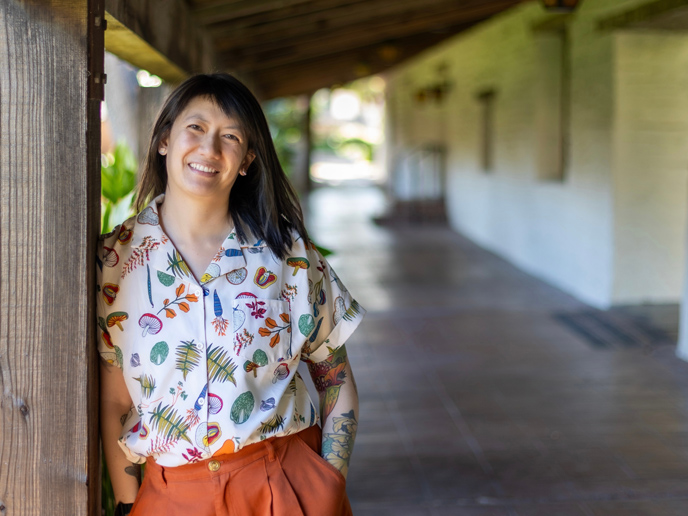
Shanise Mok
AMFT 164358 · SUPERVISED BY MOITREYEE CHOWDHURY, LMFT 121934
LGBTQIA+ · TEENS · ADULTS · COUPLES · TRAUMA
Queer-affirming therapy for teens, adults, older adults, couples, and people in all relationship structures. Works with gender and sexual identity, chronic health conditions, complex trauma, and BIPOC and immigrant experience.
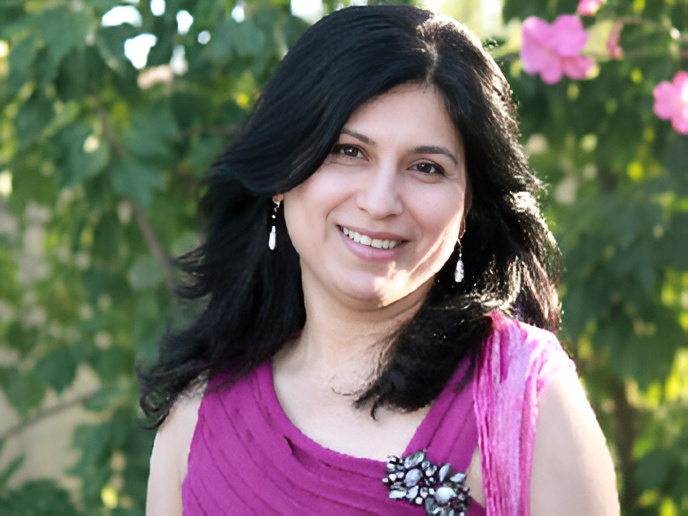
Neeraja Muthal
AMFT 144185 · SUPERVISED BY MOITREYEE CHOWDHURY, LMFT 121934
COUPLES · INDIVIDUAL · FAMILY
Works with adults on anxiety, depression, trauma, grief, work stress, and relationship conflict, drawing on CBT, psychodynamic, and solution-focused approaches. A South Asian immigrant herself, she works closely with clients navigating culture, family expectation, and identity.
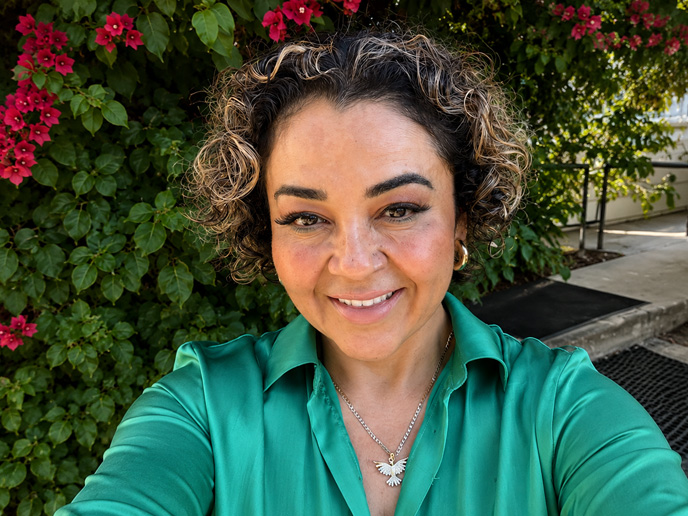
Teresa Gamez DePerez
LMFT 152063 · SPANISH
COUPLES · INDIVIDUAL · TRAUMA · GRIEF
Trauma-informed therapy for adults and couples working through anxiety, depression, infidelity, loss, and generational family patterns. A Latina therapist offering sessions in English and Spanish.
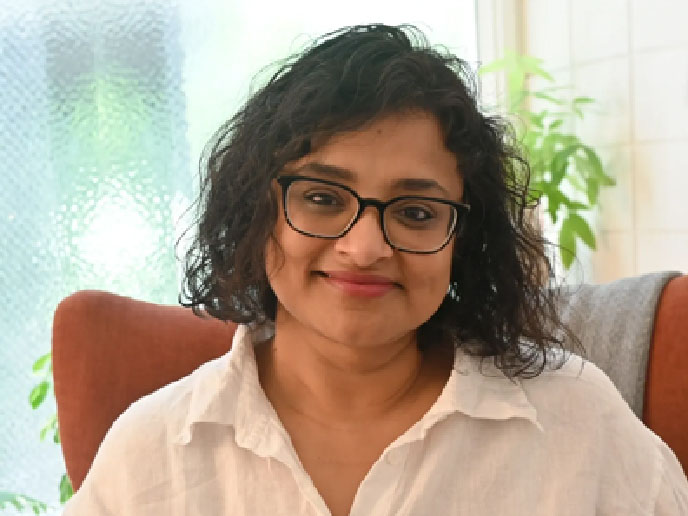
Moitreyee Chowdhury
LMFT 121934 · LPCC 9238 · EMDR
FOUNDER · COUPLES · INDIVIDUAL · FAMILY · TRAUMA
Founder and Clinical Director, practicing in California for over two decades. Works with adults, couples, and families on anxiety, trauma, depression, EMDR and OCD, with particular depth in South Asian and immigrant experience. Sessions in English, Hindi, and Bengali.
“Fertility therapy where the family situation is part of the clinical picture, not a footnote at the end of the session.”
Clinical Methods
Evidence-based approaches,
chosen for the person actually in front of us
Leela Mental Health uses four primary modalities in fertility and perinatal work. Which approach leads depends on where you are in treatment, what has already happened, and what needs attention first.
CBT
Cognitive Behavioral Therapy
CBT works on the thinking that builds up around treatment: the constant probability math, the self-blame about age or timing or a decision made years ago, the catastrophizing that arrives at 2 AM before a scan. It gives you something to do with those loops other than ride them.
DBT
Dialectical Behavior Therapy
DBT offers usable skills for the days when the feeling is too big to think through: a failed cycle, a scan that shows nothing, a pregnancy announcement in the family group chat. It also helps with the specific difficulty of holding hope and realism at once, which fertility treatment asks people to do for months at a time.
EMDR
Eye Movement Desensitization and Reprocessing
EMDR is used where something happened that the nervous system has not finished processing. A traumatic birth or loss. An emergency procedure. A conversation with a doctor that landed badly. For some clients it is an older experience entirely that treatment has brought back to the surface. EMDR is offered by clinicians at Leela who are EMDR trained, including founder Moitreyee Chowdhury.
Family Systems
Family Systems Work
For many clients the pressure is not only between two partners. It runs through in-laws, parents, siblings who conceived easily, and an extended family with long memories and strong opinions about what a family should look like by now. This work makes those structures visible without turning it into a case against your family. What you do with them afterwards is yours to decide.
Who Comes to Leela
Different points in the
same long stretch.
Leela Mental Health offers fertility therapy to individuals, couples, and families. People arrive at different stages, and the work looks different at each one.

In the middle of treatment

Two partners, one process
Couples come to Leela when fertility treatment has started to sit between them rather than beside them. Sessions make room for both versions of the same experience, including the difference in how each person copes, and including the family on each side who may be treating it as their business too.

After a loss, or after stopping
Some clients come after a miscarriage or a stillbirth. Some come after deciding to stop treatment, which is its own kind of grief and rarely gets named as one. Some are weighing donor conception, surrogacy, or adoption, and are trying to work out what they actually want before anyone else weighs in.
Why Leela
A starting point built with care, not a finished answer.
Cultural humility is something we keep working at, not something we claim to have finished.
No clinician can fully understand every version of the South Asian, East Asian, Latine, or immigrant experience of infertility. Within one family the meanings differ. What Leela offers is a starting point where the basics will not need defining: why a grandmother’s question carries weight, why a decision about treatment involves more people than the two making it, why privacy is sometimes the safest option. Your family, we still ask about. If you want to explain more, there is room for that.
Clinically rigorous methods: CBT, DBT, EMDR, Family Systems.
Each is chosen for the specific pattern you are carrying rather than handed out as a standard package. Fertility work often moves between them, because grief, medical trauma, couple dynamics, and family pressure do not respond to the same tools.
Work that fits alongside your medical care.
Therapy at Leela runs in parallel with your fertility clinic rather than in place of it. With your written consent, we can coordinate with your reproductive endocrinologist, OB, or primary care physician. Sessions are available in person in Palo Alto and by telehealth across California, including on days when you have already spent the morning at an appointment.
What people ask before reaching out.
Do you offer therapy for IVF and fertility in Palo Alto?
Yes. Leela Mental Health is a therapy practice in Palo Alto offering fertility therapy by specific clinicians, for people going through IVF, IUI, and other reproductive treatment, as well as pregnancy loss, secondary infertility, and decisions about donor conception, surrogacy, and adoption. Sessions are available in person at 220 California Ave, Suite 105, Palo Alto, CA 94306, and by telehealth throughout California. The practice works with individuals, couples, and families, and uses EMDR, CBT, DBT, and Family Systems approaches.
Can therapy improve my chances of getting pregnant?
My family does not know we are doing IVF. Is that something therapy can help with?
Do you work with couples, or only individuals?
I had a miscarriage. Does that count as fertility therapy?
Do you offer telehealth fertility therapy across California?
What does fertility therapy cost, and does insurance cover it?
Related Services
Couples Therapy
For partners where treatment has started to sit between you rather than beside you.
Grief Therapy
For loss that arrives without the rituals that usually help people carry it.
Trauma & EMDR
For medical trauma, a difficult birth, or an older experience that treatment has brought back to the surface.
Parent & Family Therapy
For the extended family system: parents, in-laws, and the generations with opinions about it.

Good Faith Estimate: You have the right to a written estimate of what your care will cost before your first session. Read the full Good Faith Estimate notice. Read the full notice ➞
Something in this has been
waiting for a room where
it can be said plainly.
Reach out to Leela Mental Health team to determine whether this practice is the right place for what you are carrying.
When you are ready, this is where to begin.
We respond within 48 hours.